

It's the line between a styling swap and a building move. New bedding, a rug, and a lamp are a Saturday afternoon. Ripping carpet for hardwood, hardwiring a chandelier, or planking a wall in shiplap are renovation decisions with a budget, a sequence, and sometimes a permit. These nine bedroom transformations mix both, and reading which is which is how you spend wisely. Here's the breakdown.
How to Assess a Bedroom Makeover
The soft layer is everything you can swap without a trade — bedding, rugs, drapery, lamps you plug in, art, plants. The hard layer touches the building — flooring, wall surfaces, hardwired lighting, built-ins, anything that needs an electrician, a plaster crew, or a permit. Nearly every "radical" before-after you'll scroll through gets eighty percent of its drama from the soft layer. The hard-layer moves are real and worth doing, but they're where the money and the sequencing live, so you want to know going in which photos are asking you to redecorate and which are asking you to renovate.
That distinction also tells you the order of operations. Hard layer first, always — you don't lay a new rug and then decide to refinish the floor under it. Read each of the nine below through that filter and you'll instantly know what a given look actually costs you.
Bohemian Rhapsody
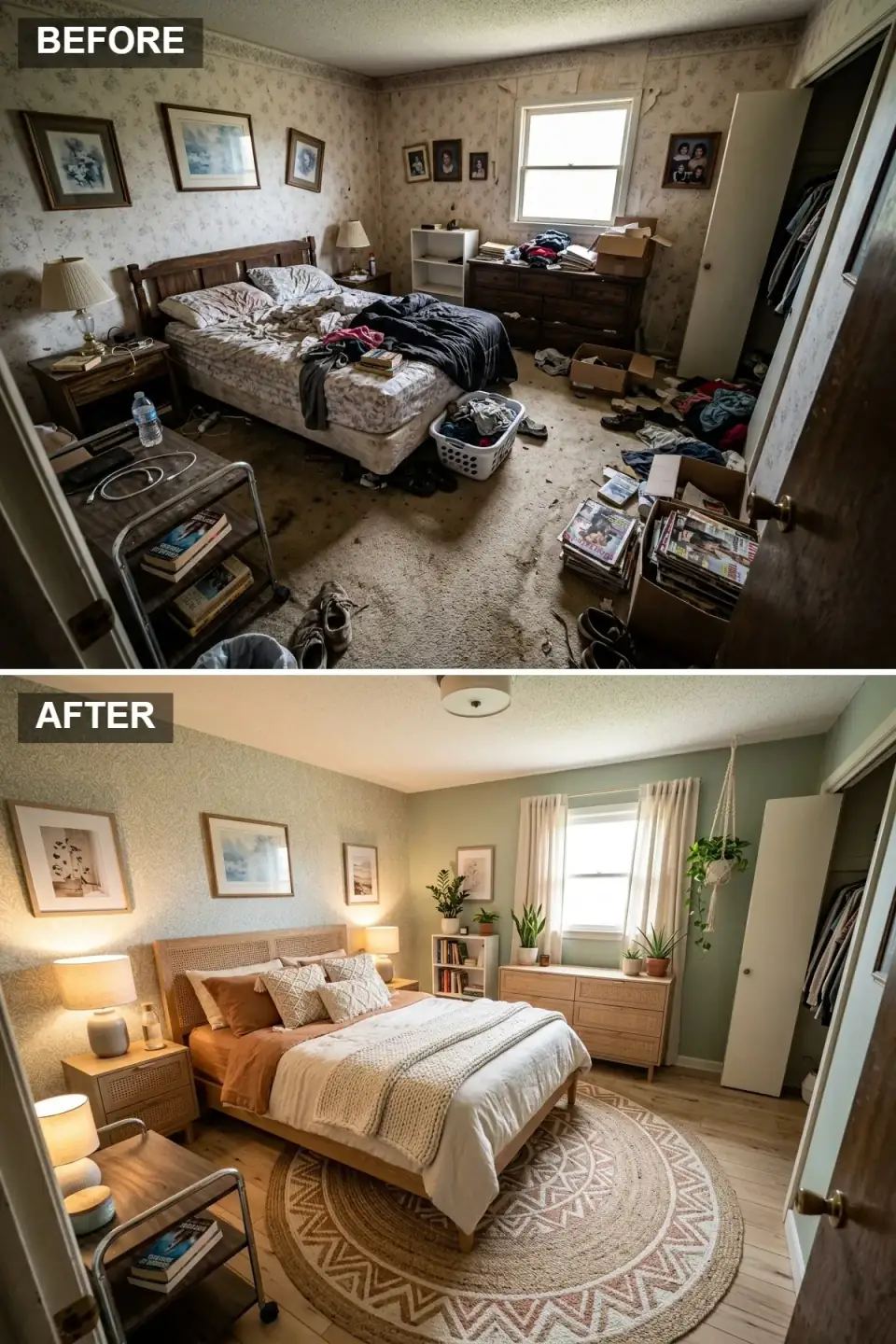
The dated wallpaper and stained carpet give way to a calming sage-green botanical feature wall and warm hardwood floors. Heavy dark furniture is replaced with light wood and rattan, a round jute rug anchors the bed, and layered terracotta-and-cream bedding adds warmth. Hanging plants and macramé finish the free-spirited look. It's a genuinely soothing room, and most of what sells it lives in the soft layer.
Here's the plan-literate read: of everything in this photo, only the flooring and the feature wall are hard-layer moves. In a lot of older the Northeast homes there's original oak or heart pine hiding under that carpet — pull a corner before you budget for new floors, because a refinish at three to five dollars a square foot beats new installation handily. The botanical "wall" can be wallpaper or a hand-painted treatment; if you rent or like to change your mind, peel-and-stick gets you the same look reversibly. Everything else — rattan, jute, macramé, the plants — is pure styling you can layer in over a weekend.
Before you budget floors. Lift a carpet corner in an older home before pricing new hardwood. Original oak or heart pine underneath refinishes for a fraction of new installation — the single biggest soft-versus-hard cost surprise in any bedroom makeover.
Urban Industrial Loft
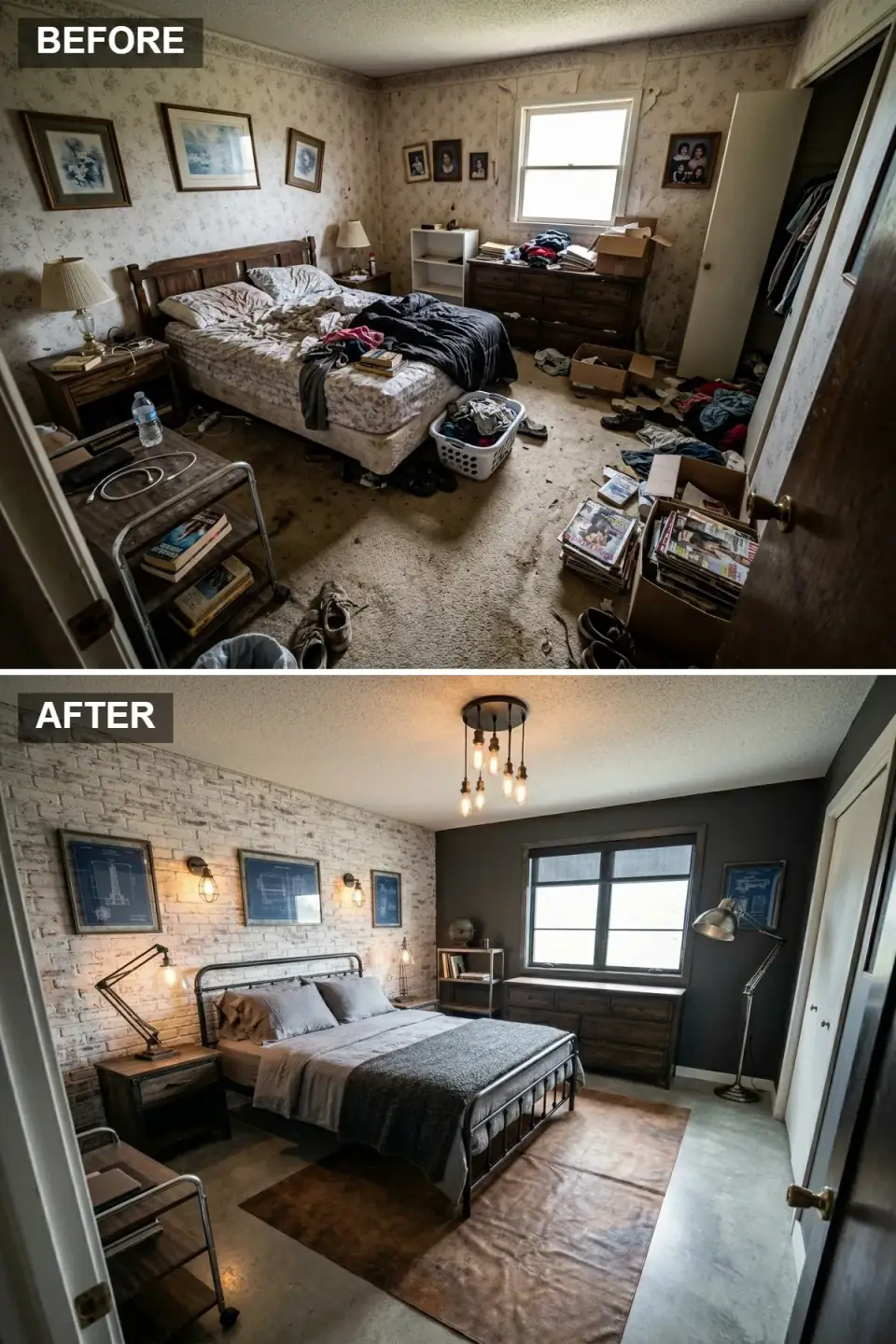
Raw texture and bold contrast define this one: a faux white-brick wall, moody charcoal paint, polished concrete floors warmed by a cognac leather rug, a black metal bed, pipe-style shelving, and an Edison-bulb fixture. It reads loft-apartment cool, and it's a great example of a look where one element on the list is quietly unrealistic for most bedrooms.
That element is the polished concrete floor. Concrete is a slab-on-grade or basement material — you cannot pour it over a wood-framed second-floor bedroom without serious structural work, because the dead load is enormous. If your bedroom is upstairs, the honest substitute is a concrete-look porcelain tile or even a large-format luxury vinyl in a concrete pattern, neither of which adds meaningful weight. The faux brick is the friendly part: peel-and-stick brick panels deliver that texture with zero masonry. Pipe shelving and an Edison fixture are easy, but note the chandelier is hardwired — if there's no ceiling box where you want it, that's an electrician and a junction-box add, not a plug-in swap.
Concrete floors, ground floor only. Polished concrete can't go over a wood-framed upper floor without structural engineering — the weight is prohibitive. Upstairs, use a concrete-look porcelain tile or large-format LVP instead for the same look at a fraction of the load.
Mid-Century Modern Revival
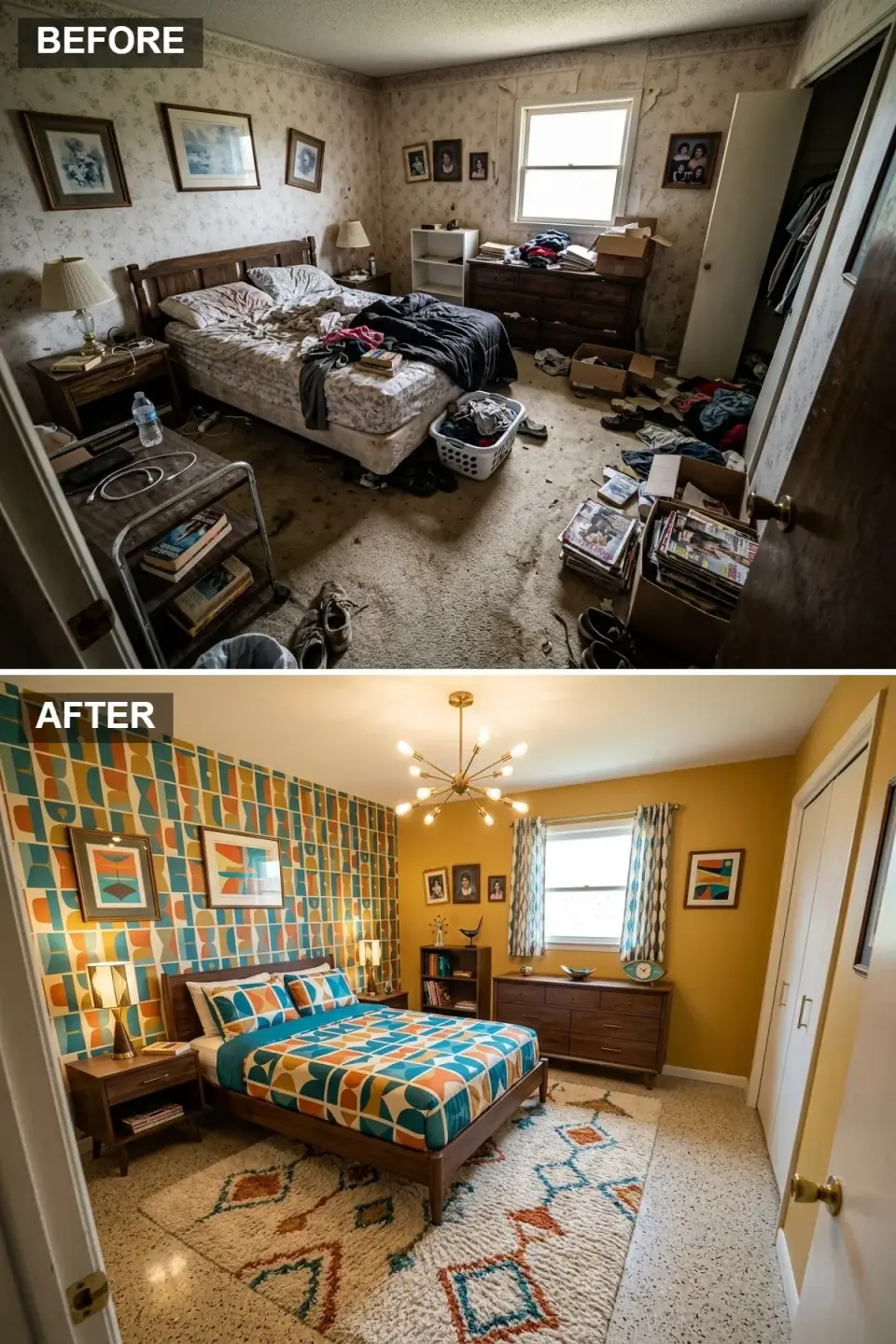
Vibrant and playful: bold geometric wallpaper in mustard, teal, and orange sets the tone, a sleek walnut platform bed and tapered-leg nightstands carry the era, and an iconic sputnik chandelier crowns the room. A patterned rug and graphic art tie the palette together. It's cheerful and stylish, and refreshingly, almost all of it is soft-layer and furniture — the most renter-friendly transformation of the nine.
The only hard-layer item is the sputnik fixture, and only if you're relocating or adding a ceiling box. The wallpaper is the star, and mid-century geometrics happen to be a category where peel-and-stick has gotten genuinely good — you can get the full graphic punch reversibly. Walnut is the era's signature wood; if you're buying new rather than vintage, look for solid walnut or a quality walnut veneer over the laminate "mid-century-look" pieces that won't age. One designer note: a wallpaper this loud wants the rest of the room quiet. Let the paper and the chandelier be the event, and keep bedding and case goods calm so the room reads collected, not chaotic.
When a wallpaper is the event, keep everything else quiet. A loud geometric plus loud bedding plus loud art reads chaotic — let the paper and the sputnik carry the drama and calm the rest.
Hollywood Glamour
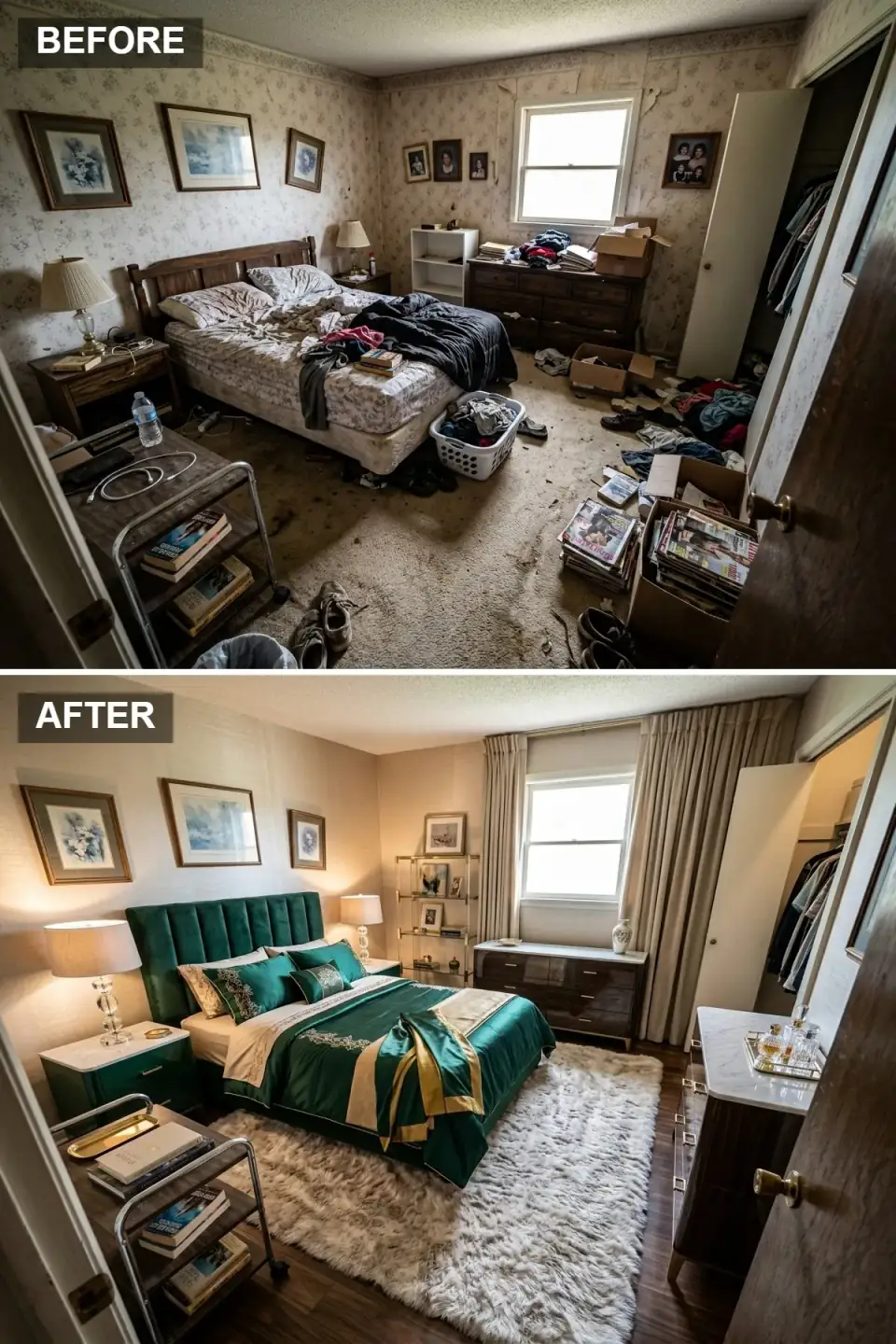
This one is pure opulence — emerald green, gold, and white. A velvet channel-tufted bed takes center stage, flanked by white marble-topped nightstands with brass accents. Dark wood floors and a plush oversized faux-fur rug replace the carpet, and floor-to-ceiling silk drapes plus a mirrored dresser complete the high-glamour scheme. It's a hotel-suite mood, and it leans heavily on a few statement pieces rather than a full gut.
The hard-layer move is the flooring; everything else is furniture and textile. A couple of plan-literate notes to make the glamour durable. Real marble nightstand tops are gorgeous but porous — a stray glass of red wine etches them, so seal them or choose a quartz that mimics the veining if the nightstand sees nightly use. Floor-to-ceiling drapes are the trick that makes a standard-height bedroom feel grand, but only if you hang the rod at the ceiling line and let the panels just kiss the floor — mounting the rod at the window trim is the most common mistake and it shrinks the room. Brass should be unlacquered or a quality finish; cheap gold-tone hardware is the detail that tips glam into costume.
Drapery trick. Hang the rod at the ceiling, not the window trim, and let the panels just brush the floor. That single move makes a standard-height bedroom read tall and grand — and it's the most-missed detail in glam rooms.
Rustic Farmhouse Retreat
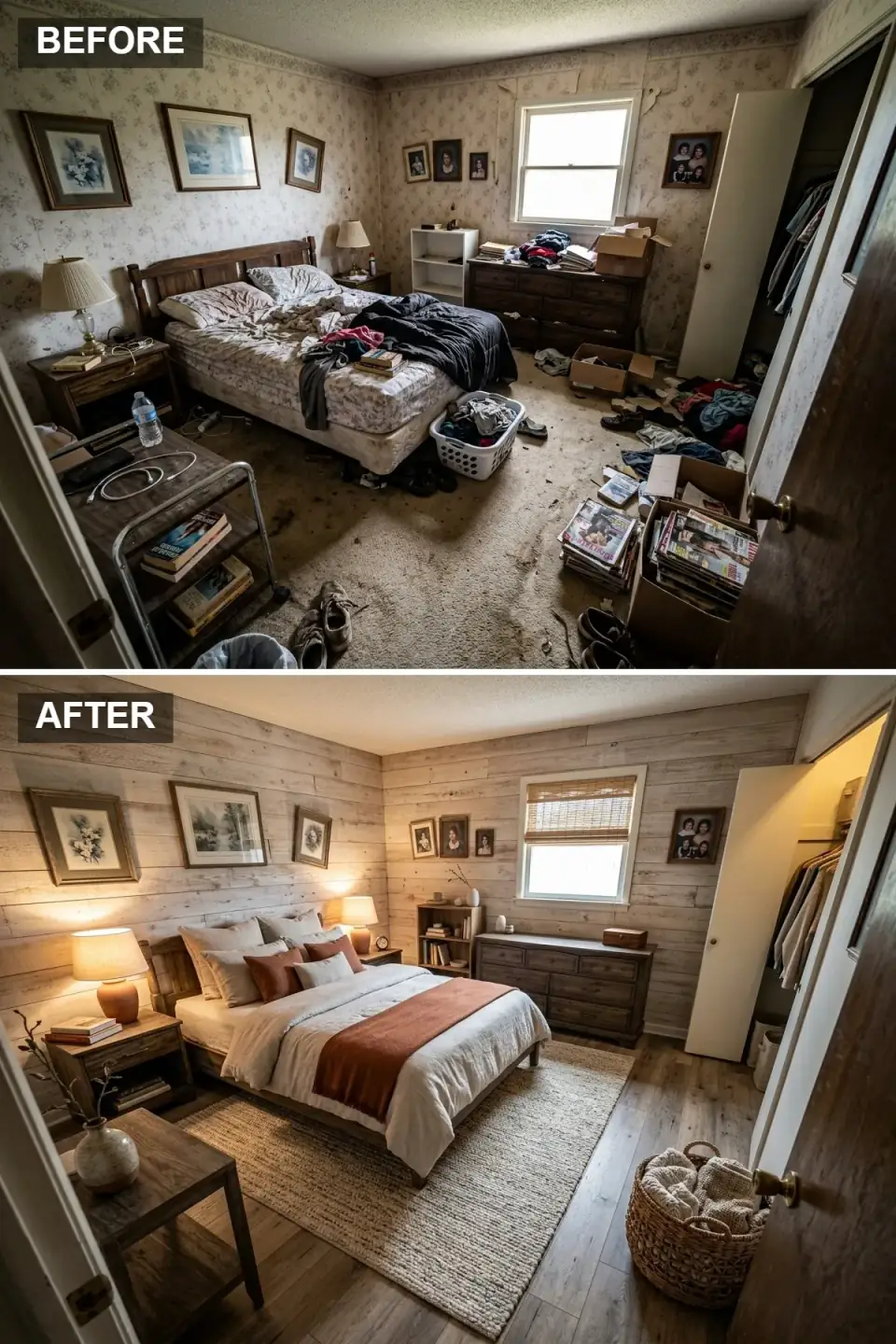
Cozy and natural: whitewashed shiplap planks cover the dated wallpaper, distressed reclaimed-look furniture replaces the old pieces, a chunky knit wool rug adds serious texture, and pottery-style lamps with simple linen bedding finish the warmth. It's an inviting, tactile room — and the shiplap is the one move that needs a little plan-literate caution in an older home.
Here's why. Many the Northeast bedrooms have original plaster-and-lath walls, and nailing shiplap straight over plaster can crack it and create a hollow cavity behind the boards. The right approach is to locate the studs and fasten through the plaster into framing, or to remove the plaster first if it's already failing. Done properly, shiplap is a durable, characterful wall; done carelessly, it's a callback. The whitewash is forgiving — a thinned paint or a lime wash both work. Everything else here is soft-layer: the wool rug, the linen bedding, the pottery lamps. This is one of the warmest looks to live in and one of the cheaper ones to execute once the wall is handled.
Shiplap over plaster. Don't nail shiplap straight into old plaster — you'll crack it and trap a cavity behind the boards. Fasten through the plaster into the studs, or remove failing plaster first. The wall handled right is the whole difference here.
Breezy Coastal Escape
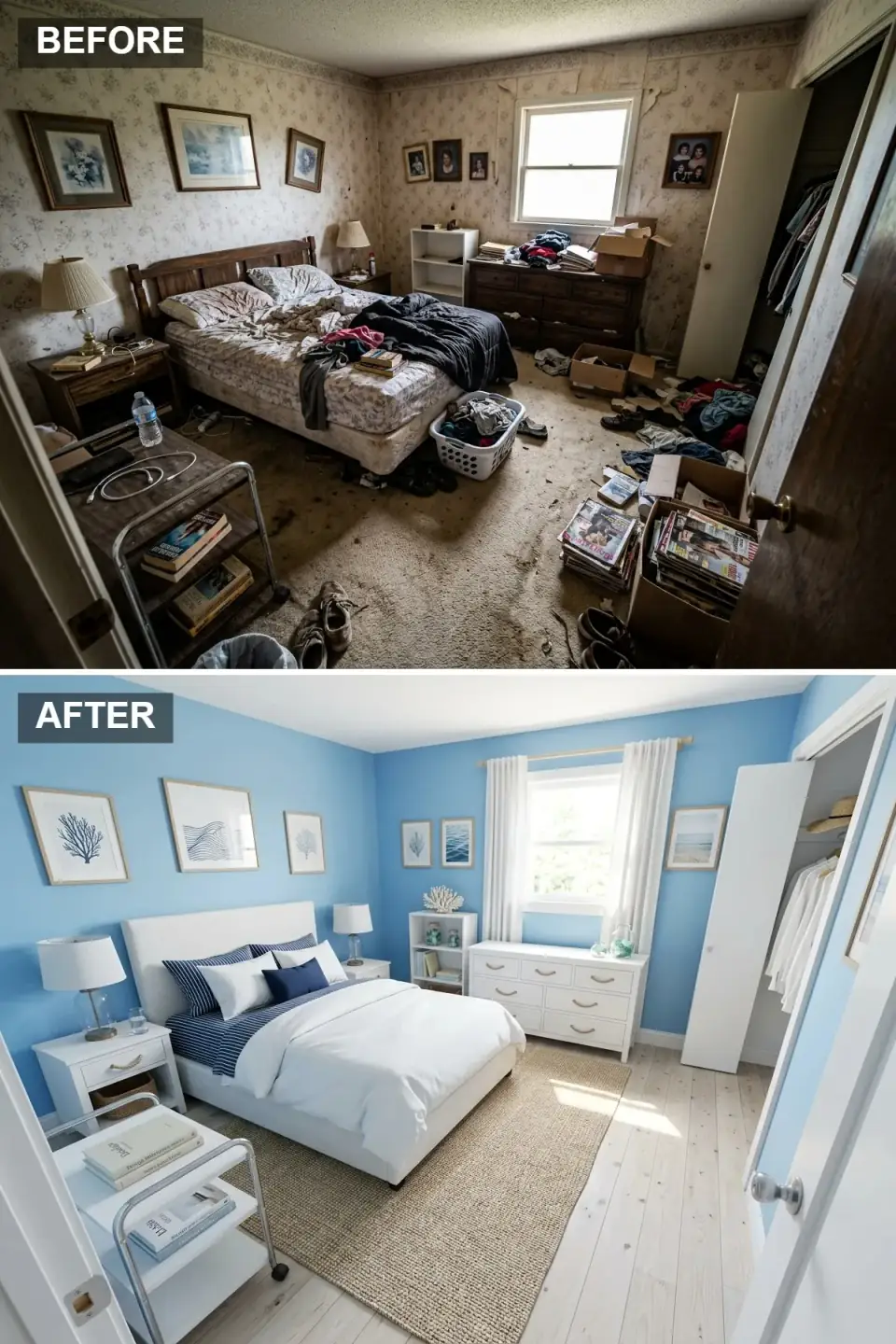
Light and relaxing: walls in a fresh sky blue, crisp white furniture in place of the heavy dark pieces, light wood floors under a large natural sisal rug, sheer white curtains, and nautical artwork with coral accents. It's airy and calm, and it's the most achievable of the nine — almost entirely soft-layer, with paint as the only real commitment.
The plan-literate angle here is light, and it's free. This look depends on bouncing daylight, so the moves that matter most cost nothing structural: sheer curtains instead of heavy drapes, a mirror placed to reflect the window, and a light floor. If your floors are already wood, a refinish in a natural or whitewashed tone gets you there without replacement. The one caution is the sky-blue paint — coastal blues read very differently in north-facing Northeast light than they do in a sunny listing photo, where they can go cold and gray. Always sample the actual paint on the actual wall and look at it morning and evening before you commit a whole room. Sisal, white bedding, and coral decor are all easy, swappable layers.
Sample before you commit. Coastal blues that glow in a listing photo can go cold and gray in north-facing Northeast light. Paint a large sample on the actual wall and check it morning and evening before you roll the whole room.
Zen Japandi room
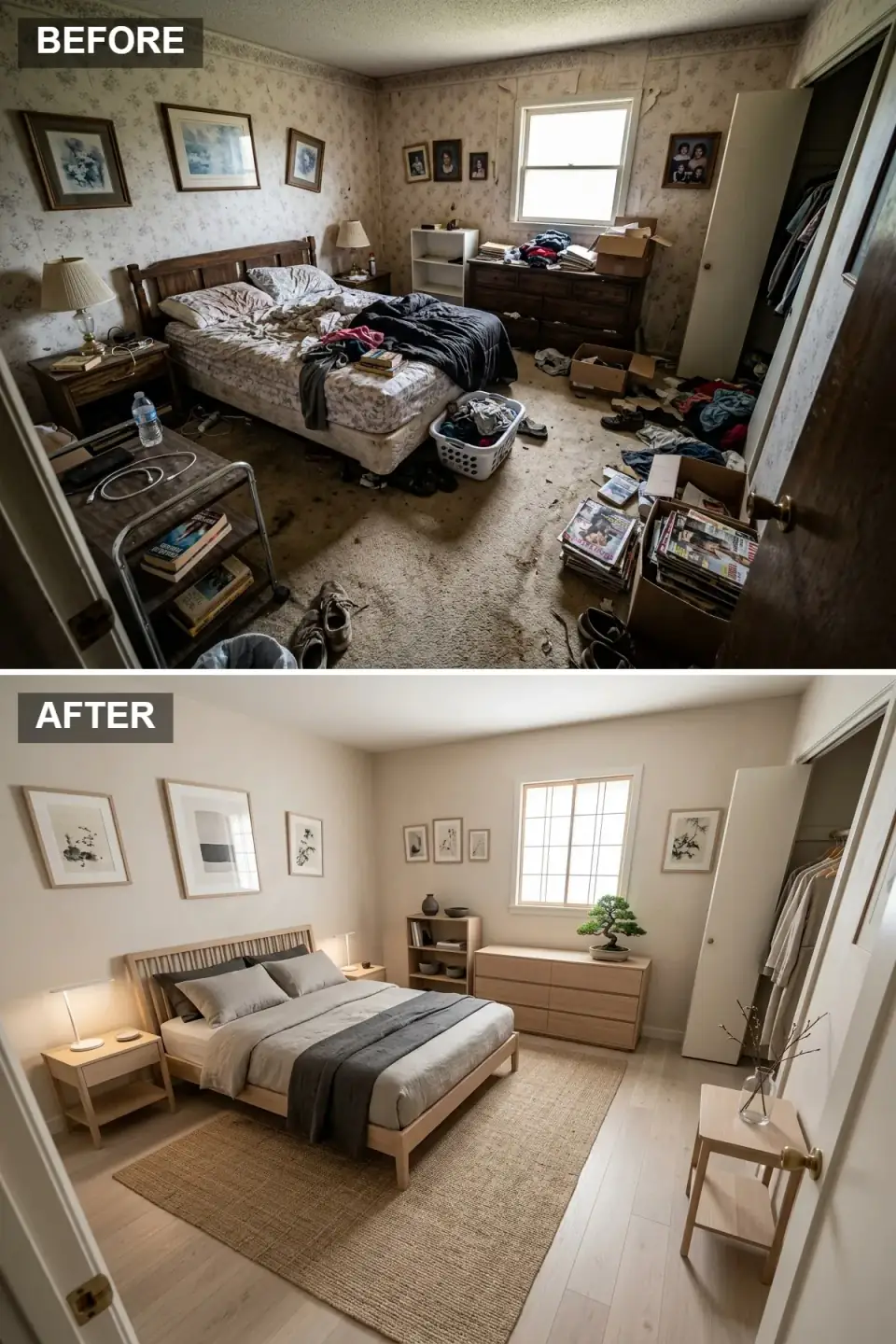
A masterclass in restraint, blending Japanese rustic minimalism with Scandinavian function. The room is cleared of clutter — smooth pale-beige walls, light wood floors, a low slat-style bed and matching pieces with clean lines, a simple jute rug, a single bonsai, and considered pottery. The whole effect is calm and uncluttered. And this is the one transformation where the most important move isn't a purchase at all.
It's the editing. Japandi lives or dies on what you remove, not what you add — which makes it the cheapest and hardest of the nine. There's no hard-layer renovation required beyond floors and paint; the discipline is keeping surfaces bare and resisting the urge to fill them. From a plan-literate angle, this is the style that most rewards thinking about storage architecture: a Japandi room only stays serene if everything has a home out of sight, so it pairs beautifully with built-in or under-bed storage that absorbs the clutter the look can't tolerate. Choose a few honest materials — solid light wood, linen, ceramic, paper — and let negative space do the design work. The bonsai is the single sculptural gesture; don't add a second.
Japandi stays calm only if clutter has somewhere to disappear. Pair the look with built-in or under-bed storage — the serenity comes from concealment, not from owning less in theory.
Roaring Twenties Art Deco
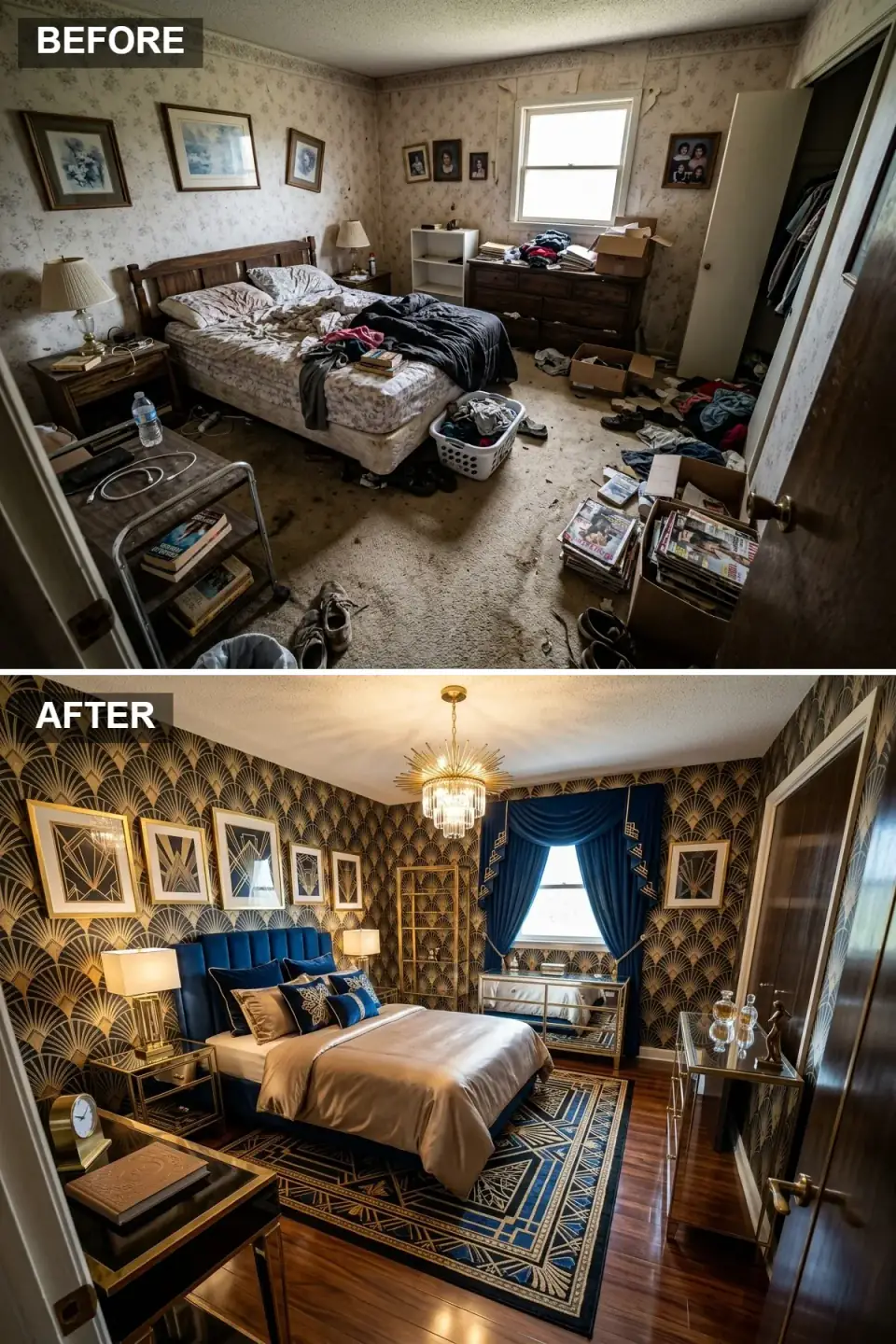
Bold patterns and luxurious finishes: walls in striking black-and-gold geometric fan wallpaper, rich sapphire velvet drapery, mirrored dresser and nightstands reflecting a dazzling crystal chandelier, and a blue-and-gold geometric rug pulling the scheme together. It reads like a high-end hotel suite. It's the most maximalist of the nine and, done right, the most photogenic.
Done right is the operative phrase, because Art Deco is the style where cheap materials read cheapest. The wallpaper carries the whole room, so this is the place to invest in real paper rather than a thin print — the pattern repeat and the metallic ink quality are immediately visible. The crystal chandelier is hardwired, so if you don't already have a centered ceiling box rated for the fixture weight, that's an electrician and possibly a brace box, not a swap. Mirrored furniture is the easy glamour, but it shows every fingerprint and chips at the edges, so buy quality there too. Velvet drapery, again, wants to hang ceiling-high to give this dramatic style the verticality it craves. This is a soft-layer-heavy look with one real hard-layer item — the light fixture.
Brace the chandelier. A crystal fixture is heavy and hardwired. A standard ceiling box won't hold it — you need a fixture-rated brace box and, often, an electrician. Confirm the box rating before you fall in love with the chandelier.
Scandinavian Minimalism
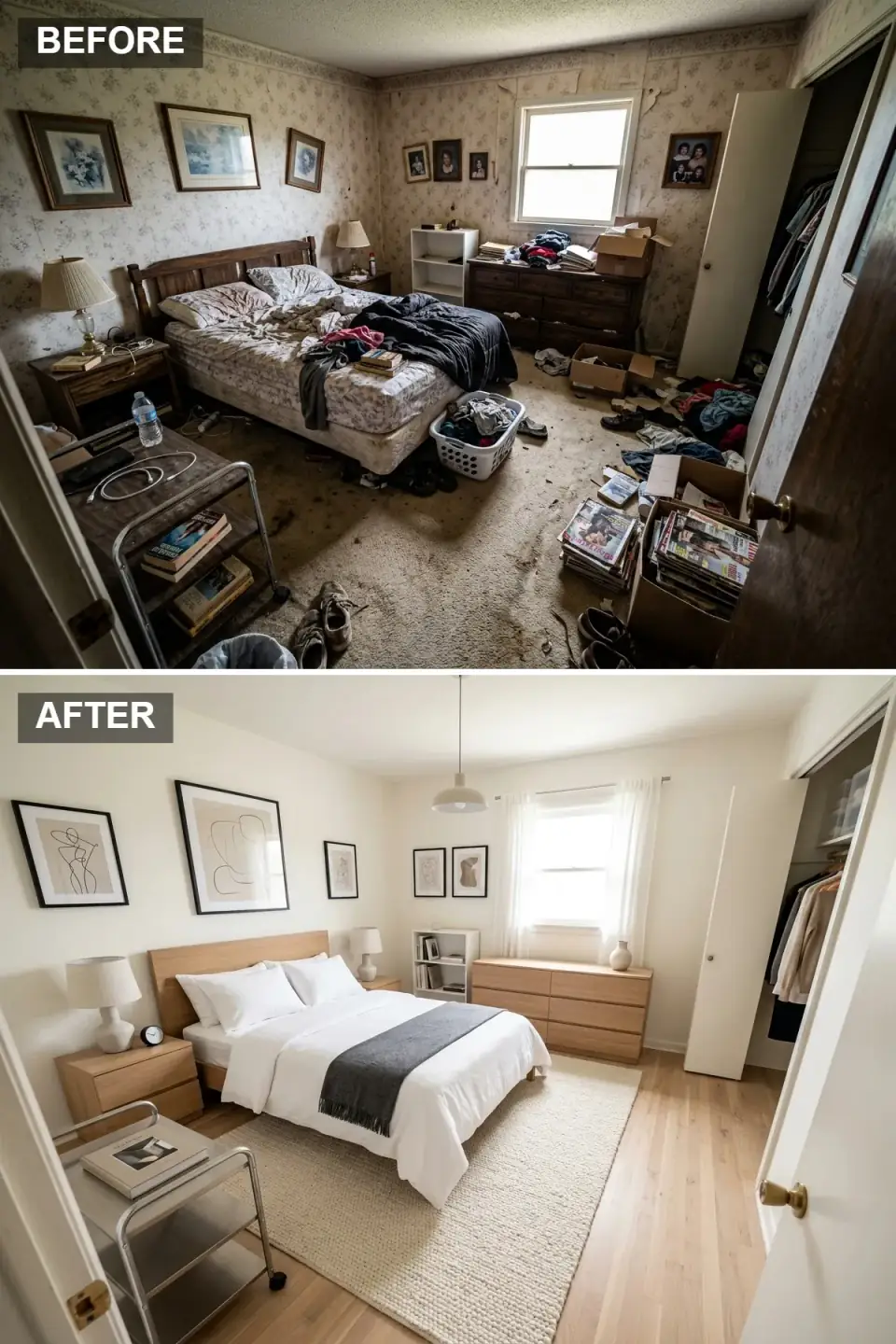
Bright, clean, and functional: crisp white walls reflecting the window light, light oak flooring replacing the carpet, a minimal light-wood bed and dresser, white bedding with a grey throw, a textured cream rug, and minimalist line art. It's calm and highly functional — and it's the closest cousin to the Japandi room, with the same soft-layer-dominant, edit-driven discipline.
The plan-literate insight for Scandi is that "minimal" is not the same as "cheap to do well." When you strip a room down to white walls and light oak, every remaining surface has to be excellent, because there's nowhere for a flaw to hide. The white paint has to go on evenly over well-prepped walls; the oak floor's grade and finish are fully exposed. So this is the look where the hard-layer dollars go into doing fewer things to a higher standard — a proper paint prep, a quality engineered or solid white-oak floor with a matte finish, good light. Then the soft layer is deliberately sparse: one good wool rug, crisp linens, a single piece of line art. Scandi rewards spending on quality over quantity, which makes it deceptively demanding for how simple it looks.
The discipline pick. Scandi and Japandi look the simplest but demand the most. With nothing to hide behind, every surface and every retained object has to be genuinely good. Spend on quality over quantity — fewer things, done to a higher standard.
Planning checks for Scandinavian Minimalism
Sort every change into soft or hard. Soft-layer items — bedding, rugs, lamps, art — are a weekend and a credit card. Hard-layer items — floors, hardwired lighting, wall systems — need a trade, a sequence, and sometimes a permit. Knowing which is which is how you build a planning ranges.
Declutter before you decorate. No finish, color, or rug rescues a cluttered room. Clear it out completely first — half these "transformations" are really the absence of mess plus a few well-chosen pieces.
Check under the carpet first. In older Northeast homes there's often original oak or heart pine beneath the carpet. A refinish costs a fraction of new flooring, so investigate before you budget a single dollar for replacement.
Hang drapery high and wide. Mount the rod near the ceiling and extend it past the window frame. This one free move adds perceived height and grandeur to any style, from coastal to Art Deco.
Hardwired lighting is renovation, not decor. A statement chandelier or sconces need a rated ceiling box, a switch loop, and often an electrician.
Sample paint on the actual wall. Color shifts dramatically with our north-facing Northeast light. Test a large swatch morning and evening before committing a whole room — especially with blues, greens, and true whites.
Budget priorities for One Messy Bedroom, Nine distinct Transformations
Refinish, don't replace. If there's sound wood under the carpet, refinishing runs roughly $3–$5 per square foot in the Northeast versus $8–$14 for new installed flooring — the biggest single saving in any bedroom makeover.
Peel-and-stick the feature wall. Removable wallpaper and faux-brick panels deliver the boho, mid-century, and industrial wall looks for a small fraction of permanent treatments — and they're renter-safe and reversible.
Paint and re-style before buying furniture. A gallon of quality paint and a rearrange transform a room's mood for under $200. Spend on the bed and one anchor piece, and let soft layers carry the rest.
Clad the look you can't afford to build. Concrete-look porcelain or LVP for the industrial floor, quartz for the glam marble top — engineered lookalikes capture the style without the structural or maintenance cost of the real thing.
The Core Idea. One bedroom, nine reveals, and the real skill is reading each photo for what it's actually asking of you. A plan-literate eye separates the soft layer — bedding, rugs, lamps, plants, the weekend stuff — from the hard layer that touches the building, where the money, the trades, and the sequencing live. Declutter first, handle the floors and walls and wiring before you style, and choose engineered lookalikes where the real material adds cost or load you don't need. Do that, and any of these nine styles becomes a clear-eyed project with a known budget instead of a Pinterest board you can't price.
Questions about One Messy Bedroom, Nine distinct Transformations
Which of these makeovers can a renter actually do?
Most of the drama is renter-friendly if you stick to the soft layer. Bohemian, mid-century, coastal, Japandi, and Scandinavian rely heavily on bedding, rugs, removable wallpaper, plug-in lamps, and furniture — all reversible. Peel-and-stick wallpaper and faux-brick panels cover the feature-wall looks without permanent damage. What renters should avoid are the hard-layer moves: new flooring, hardwired chandeliers, shiplap, and built-ins. Stick to color through removable wallpaper, lighting through plug-in or clip fixtures, and texture through textiles, and you can land seven of these nine looks without touching anything you'd have to restore at move-out.
What's the single highest-impact change in a bedroom?
Flooring, usually — replacing stained carpet with wood or a wood-look surface resets the entire room's feel and reads as the biggest before-and-after jump. But the highest-impact change relative to cost is decluttering plus paint. Clearing the room completely and rolling a well-chosen color costs under a couple hundred dollars and transforms the space before you buy a single new item. After that, the bed is the anchor purchase. That order also happens to be the right sequence to do the work in.
Can a homeowner put polished concrete floors in an upstairs bedroom?
Not realistically. Polished concrete is a slab-on-grade or basement material — pouring it over a wood-framed upper floor adds enormous dead load and requires structural engineering that almost never pencils out for a bedroom. If you want the industrial concrete look upstairs, use a concrete-look porcelain tile or a large-format luxury vinyl plank instead. Both deliver the cool, raw aesthetic at a tiny fraction of the weight, and they install over a standard subfloor. Save true concrete for ground-floor or basement bedrooms built on a slab, where it's a genuine and durable option.
How much does a bedroom makeover cost in 2026?
It depends entirely on the soft-versus-hard split. A soft-layer refresh — paint, bedding, a rug, a lamp, removable wallpaper — runs a few hundred to about $1,500 in the Northeast. Add hard-layer work and it climbs: refinishing existing wood floors at $3–$5 per square foot, new flooring at $8–$14, a hardwired fixture with an electrician at $200–$500, a shiplap accent wall at $800–$2,000. A full bedroom transformation touching floors, walls, and lighting typically lands somewhere between $4,000 and $12,000. Decide which changes are soft and which are hard first, and the budget follows directly.
Is shiplap safe to install over old plaster walls?
It can be, with the right method. Many older the Northeast bedrooms have plaster-and-lath walls, and nailing shiplap straight into plaster tends to crack it and leave a hollow cavity behind the boards. The correct approach is to locate the studs and fasten the shiplap through the plaster into solid framing, or — if the plaster is already failing — to remove it first and install over the bare studs or new sheathing. Done properly, shiplap is durable and full of character. Done carelessly, it cracks the wall and works loose. Find your framing before the first nail.
For bolder, personality-forward rooms in the mid-century and Art Deco spirit, see dopamine dreams, and browse the full set under bedrooms and kids' rooms.
Sources & Further Reading
- This Old House, bedroom renovation and flooring guides.
- National Park Service, Preservation Brief 21 — Repairing Historic Plaster.
- National Wood Flooring Association, refinishing versus replacement guidance.
- Architectural Digest, interior style references — Art Deco, Japandi, mid-century.
- Remodelista, minimalist and Scandinavian bedroom design.
- Benjamin Moore, paint color references and north-light considerations.
- U.S. Consumer Product Safety Commission, guidance on securing furniture and light fixtures.
- Fine Homebuilding, articles on shiplap installation and wall framing.

Renovations & Interiors Desk
Renovation Studies & Room Guides · Northeast United States research focusThe Renovations & Interiors Desk develops sourced room guides and editorial concept studies without presenting concepts as completed client work.
More from this desk →

Reader notes