
The room wasn't wrong; it was simply for the wrong person now. Teenage rooms are the trickiest brief in residential design because the occupant is changing every six months, and the parent is paying the bill for a renovation that can't keep happening every six months. Below: ten teen-room vibes across the budget spectrum, the framing-stage decisions that let a room shift identity without a full redo, and the brand-level material specs that hold up to actual teenage daily use.
How to Assess a Teen-Room Renovation
Four checks guide the assessment of a teen-room renovation: the permanent layer (wall finishes, flooring, built-ins, lighting plan — the things that should outlast three taste shifts), the swap-able layer (bedding, posters, accessories, throws — the things that change every eighteen months), the study and screen plan (where the desk lands relative to natural light, where the gaming setup lives, how cables route), and the privacy curve (door, window, sound — teens need a room they can close emotionally as well as physically). Get the permanent layer right and the room can shift identity three times in five years without a single contractor visit.
The walls, the lighting plan, and the desk infrastructure are framing-stage decisions; the rest is updating. The ten vibes below cover the full range from a $1,650 sports hub anyone can pull off with paint and IKEA furniture up to a $13,000 high-tech gamer cave with custom 3D paneling.
The numbering follows the visual reading order — moody and dark first, light and minimal second, themed last — not a ranking. Room #4 (sports hub) is not better or worse than room #5 (pastel floral); they're different briefs for different occupants.
The Moody Dark Academia Retreat
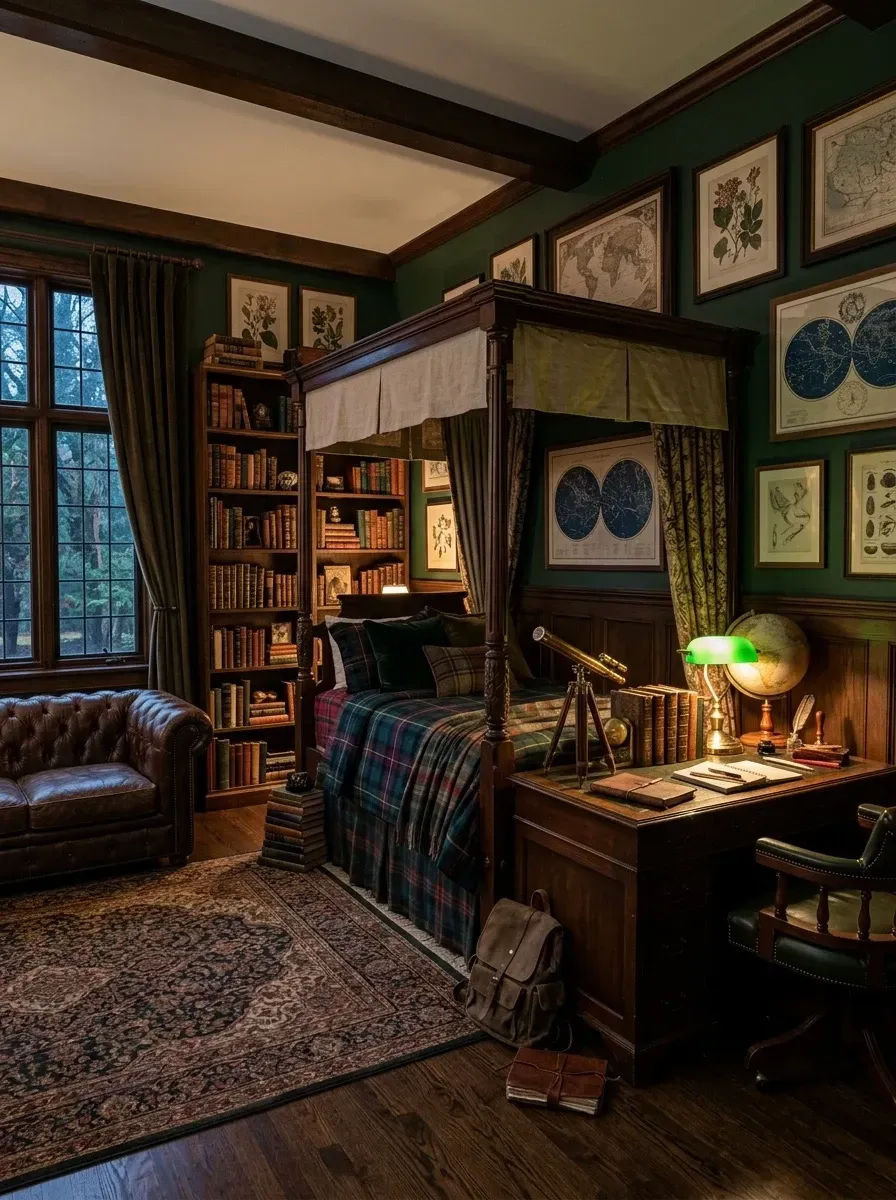
A vintage-library aesthetic for a teen who lives in books. Deep emerald walls and dark walnut furniture create the cocooning effect that's the format's defining feature; full-grain leather and wool textiles add the tactile layer that prevents dark monochrome from going flat. Floor-to-ceiling built-in bookshelves do the architectural work — they're the framing-stage decision that lets the room transition from teenage academic to adult study without a single piece of millwork changing hands.
Built-in bookshelves are the splurge worth making because they outlast three room redesigns. Custom oak or walnut built-ins from the Northeast shop run $2,500–$5,000 for a full wall — and they need to be on the framing drawings before drywall closes (the wall behind has to be stud-aligned for the cabinet shop's flush-finish back panels). For the leather Chesterfield, full-grain cognac leather (Restoration Hardware Lancaster, Castlery, or Norr11 quality tier) at $1,200–$2,500 ages in over a decade. The deep emerald paint spec to use is Farrow & Ball Studio Green (No. 93) or Benjamin Moore Hunter Green (2041-10) — never primary green; the desaturation is what makes it read library, not playroom.
The Moody Dark Academia Retreat direction brings together four-poster dark walnut canopy bed, floor-to-ceiling custom built-in bookshelves, full-grain leather Chesterfield sofa or armchair, vintage mahogany desk with antique brass banker's lamp, and gallery wall of botanical and vintage map prints.
Budget notes for The Moody Dark Academia Retreat
Four-Poster Queen Bed Frame: $500 – $1,200. Custom Built-In Shelving (Materials & Labor): $2,500 – $5,000. Full-Grain Leather Chesterfield Sofa: $1,200 – $2,500. Vintage-Style Wood Desk: $400 – $900.
Captain's Desk Chair: $250 – $500. Large Patterned Area Rug: $300 – $800. Gallery Wall Art & Frames (×10+): $300 – $700. Decor Accents (Globe, Telescope, Banker's Lamp): $250 – $600.
Paint & Supplies: $150 – $300. Total Estimated Cost: $5,850 – $12,500.
Dark academia is a permanent-layer commitment — the wall color and built-ins should outlast the room's specific use. When the bedroom becomes a guest room or office in a decade, the same envelope still works. That long horizon is what justifies the built-in budget.
Breezy Coastal Minimalist
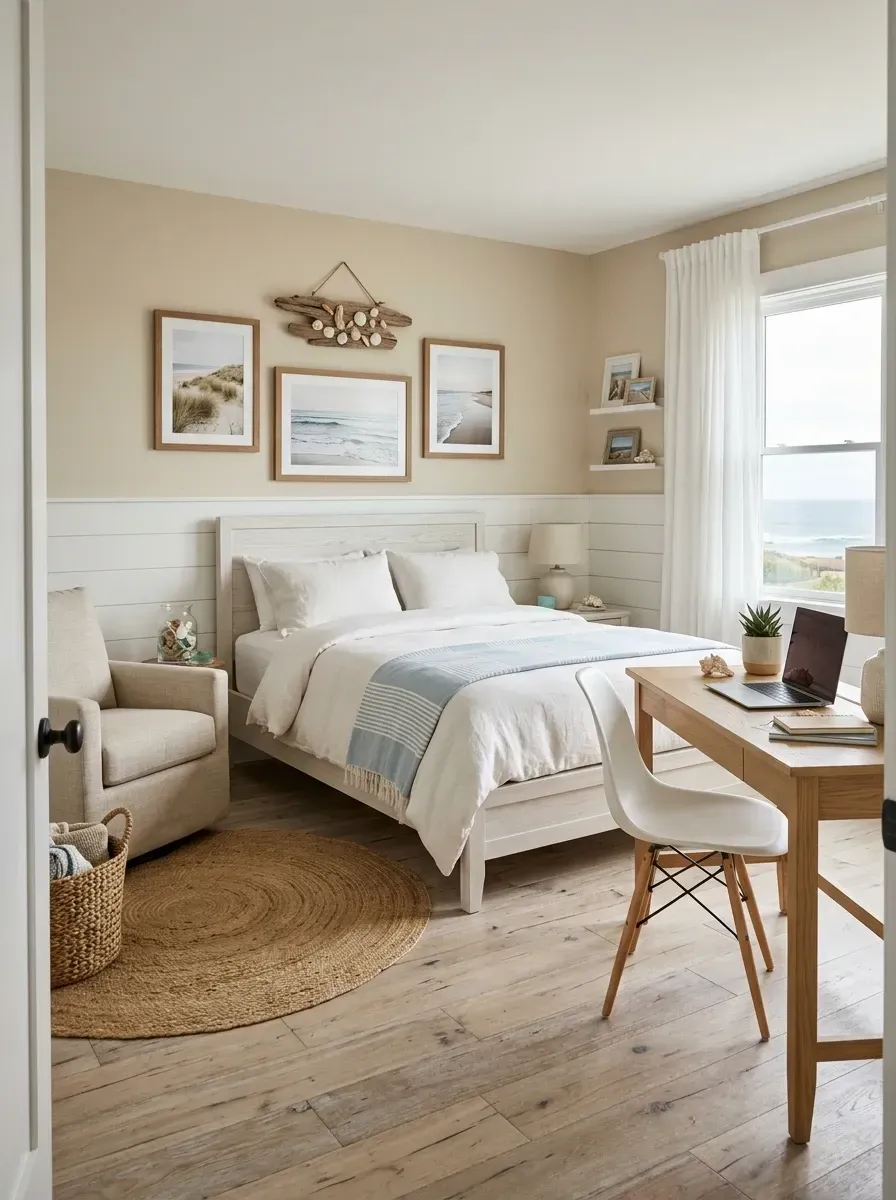
An airy, uncluttered alternative to the dark format. White shiplap wainscoting on the lower walls adds architectural interest the room would otherwise lack; sandy beige uppers keep it from going stark. The round jute rug is the format-defining piece — it softens the room's right angles and adds the natural-fiber tactile layer the rest of the palette requires. This format works particularly well for a Hudson River weekend cottage or an East-coast beach-influenced primary home.
Shiplap on the lower walls is a DIY-friendly weekend project — primed pre-cut MDF or pine shiplap from Metrie or a regional lumberyard at $800–$1,800 in materials and labor for a single bedroom. Run it from the baseboard up to roughly 36–42 inches and cap with a chair rail. For the bedding, Belgian linen from Cultiver, Coyuchi, or Brooklinen at $300–$600 — the linen ages soft over a decade. The light bleached-oak floor is the bigger spec call: real white oak with a hardwax oil finish (Rubio Monocoat Pure or Bona Mega ONE) reads better over time than engineered alternatives, but engineered oak is the right choice over a basement slab.
The Breezy Coastal Minimalist direction brings together white shiplap wainscoting on lower walls, light bleached oak wood flooring, round natural jute area rug, simple white wood bed frame with linen bedding, and minimalist oak desk and modern chair.
Budget notes for Breezy Coastal Minimalist
Shiplap Installation (Materials & Labor for lower walls): $800 – $1,800. Simple White Queen Bed Frame: $300 – $700. Belgian Linen Bedding Set & Throws: $200 – $500. Minimalist Oak Desk: $250 – $600.
Modern Dining-Style Desk Chair: $80 – $200. Upholstered Armchair: $350 – $800. Large Round Jute Rug: $150 – $400. Coastal Wall Art & Decor: $200 – $500.
Paint & Supplies: $100 – $250. Total Estimated Cost: $2,430 – $5,750.
Shiplap requires furring strips behind the wood to create a drainage and air-flow cavity in any room with potential humidity (basement-adjacent rooms, second floors over kitchens). For a typical second-floor bedroom this isn't necessary, but verify the room's moisture profile before installing directly to drywall.
Eclectic Vintage Boho Maximalist
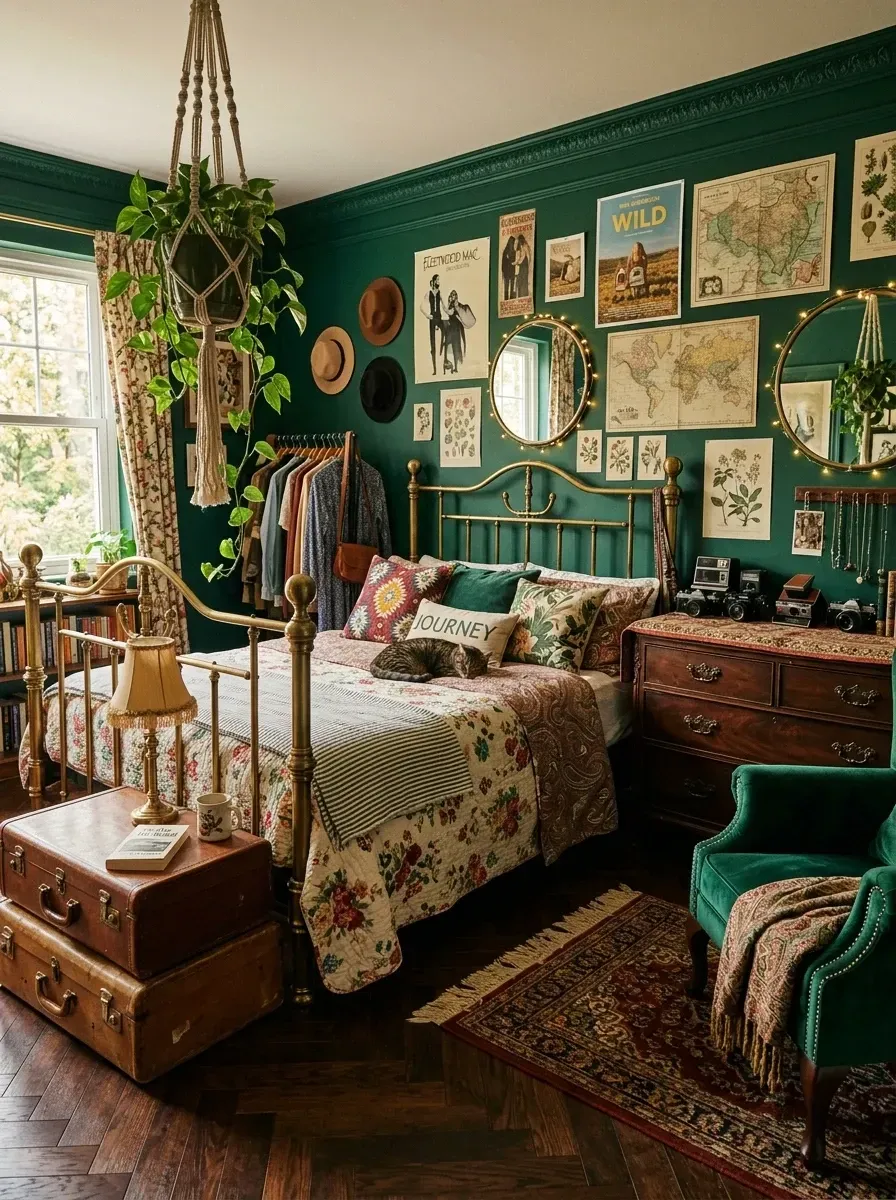
A confident, color-forward maximalism that succeeds when the discipline is visible underneath the chaos. Forest green walls, vintage brass bed, deep teal velvet armchair, layered Persian-over-jute rugs — every element comes from the same desaturated jewel-tone family. The gallery wall is the format-defining decorative move and the easiest place to over-do; the rule is to mix sizes and frame finishes but keep the visual weight balanced across the wall.
Vintage brass beds are surprisingly available — estate sales, regional auctions, the Northeast antique shops, or Etsy at $400–$1,000 for a queen-frame in good condition. Specify a rust-resistant clear lacquer if the brass shows oxidation; never strip it bare unless you're committed to ongoing polishing. For the velvet chair, performance velvet (Crypton or Sunbrella weave) at $350–$900; decorative-grade velvet pills within months of teenage daily use. The forest green wall spec to use is Farrow & Ball Green Smoke (No. 47) or Sherwin-Williams Pewter Green (SW 6208) — saturated enough to commit, desaturated enough to live with.
The Eclectic Vintage Boho Maximalist direction brings together bold saturated forest green painted walls, vintage brass canopy bed frame, antique wooden dresser, deep teal performance-velvet armchair, layered Persian-style rug over jute base, and extensive considered gallery wall.
Budget notes for Eclectic Vintage Boho Maximalist
Vintage Brass Bed Frame (Queen): $400 – $1,000. Vintage Wooden Dresser: $300 – $800. Velvet Accent Armchair: $350 – $900. Layered Rugs (Large Jute + Medium Persian Style): $350 – $900.
Extensive Gallery Wall (Art, Mirrors, Frames): $400 – $1,000. Bedding & Varied Throw Pillows (×5+): $250 – $600. Plants & Macrame Hangers (×5+): $150 – $400. Lighting (String Lights, Vintage Lamps): $150 – $350.
Paint & Supplies: $150 – $300. Total Estimated Cost: $2,500 – $6,250.
When you commit to a saturated wall color, paint the trim, doors, and ceiling in the same color or one shade lighter. Pure white trim against a saturated green wall reads suburban-builder; matched envelope tones read designed.
Modern Industrial Sports Hub
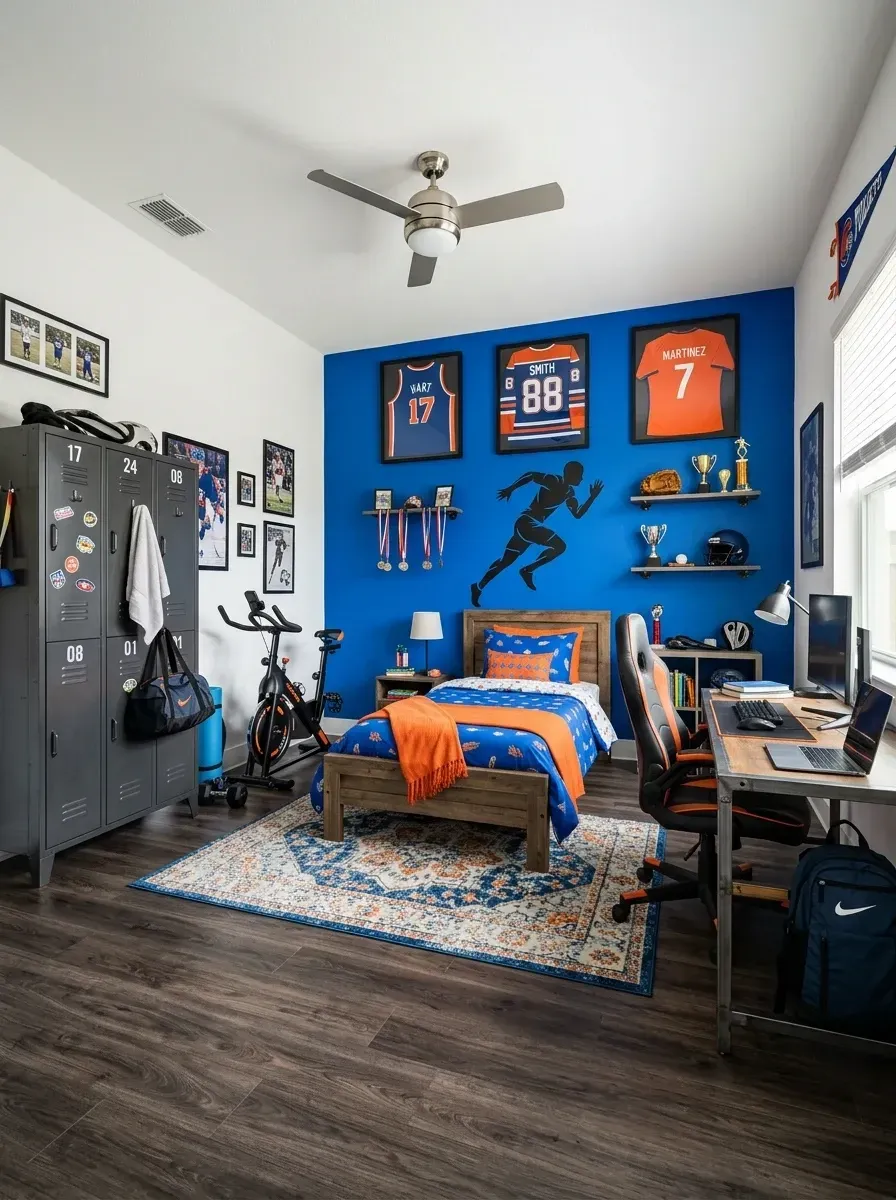
A sports-focused room that avoids the most common failure mode (looking like a kid's room that grew up by accident). The discipline is restraint: one bold accent wall, professionally framed memorabilia, and industrial materials for the rest. The metal locker provides ample closed storage that hides the inevitable mess; the gaming chair handles the second-room duty (homework + console play) without needing a separate gaming setup.
Jersey shadowbox framing from a regional frame shop runs $100–$300 per jersey and is the line item that separates the format from "tacked posters." The industrial pipe desk is a DIY-friendly project — black iron pipe fittings ($150–$200) plus a butcher-block top ($150–$300) yields the look at half retail cost. For the gaming chair, Secretlab Titan Evo, Herman Miller Embody Gaming, or Steelcase Series 1 — never the imported "RGB gaming throne" tier under $200, which fail at the lift mechanism within twelve months. The metal locker is genuinely surplus from school auctions or restoration shops; refinished gym lockers from the Northeast salvage runs $250–$600.
The Modern Industrial Sports Hub direction brings together single bold royal blue accent wall, professionally shadowbox-framed sports jerseys, industrial grey metal locker storage cabinet, rustic wood and metal pipe desk, ergonomic gaming chair, and floating shelves for trophies and collectibles.
Budget notes for Modern Industrial Sports Hub
Rustic Wood Bed Frame (Twin/Full): $300 – $700. Metal Locker Storage Cabinet: $250 – $600. Industrial Wood & Metal Desk: $200 – $500. Ergonomic Gaming Chair: $150 – $400.
Professional Jersey Framing (×3): $300 – $900. Floating Shelves & Wall Decal: $100 – $250. Themed Bedding & Rug: $200 – $500. Paint & Supplies (Accent + Neutral Walls): $150 – $300. Total Estimated Cost: $1,650 – $4,150.
Build the room so the team-specific accents are easy to swap. Frame jerseys in standard sizes that can be re-glazed if the team allegiance changes (it does), and limit team-color paint to the single accent wall — repainting one wall is a weekend; repainting four is a renovation.
Dreamy Pastel Floral room
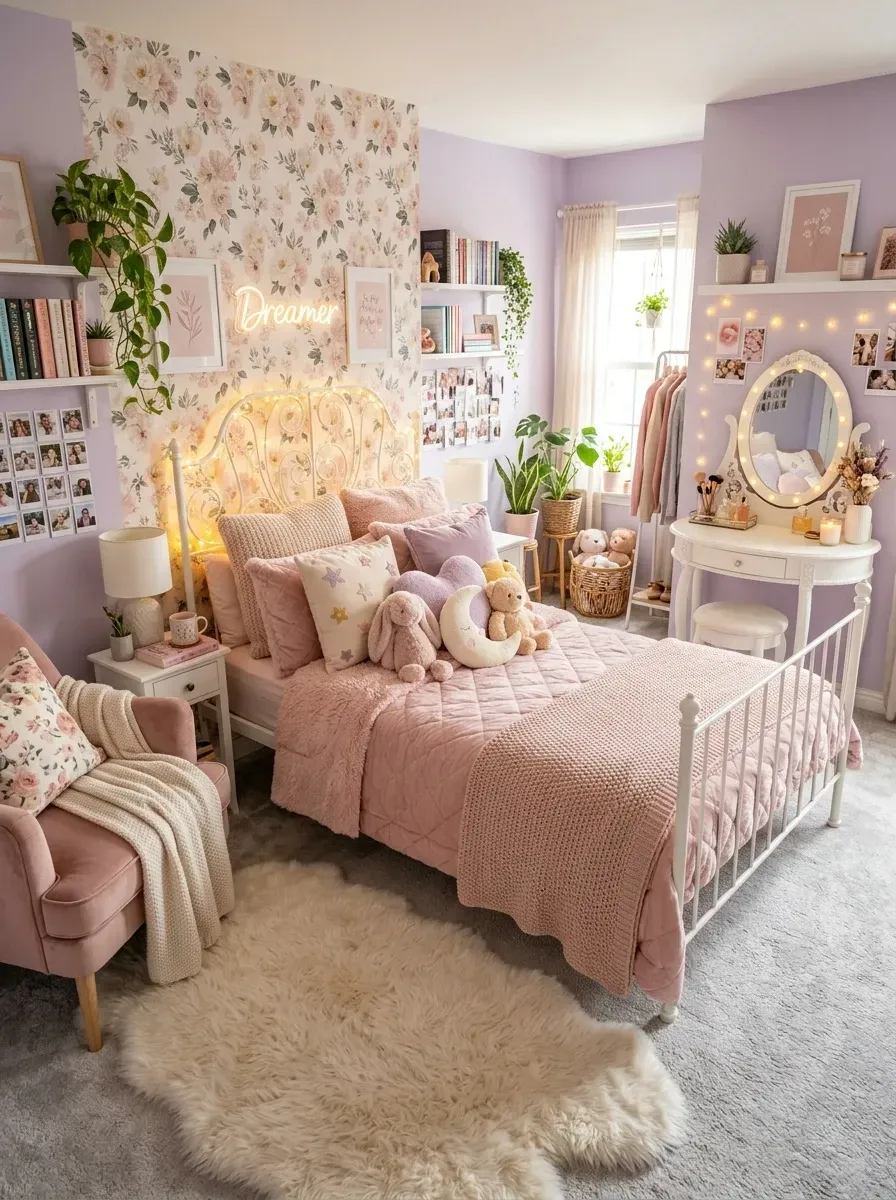
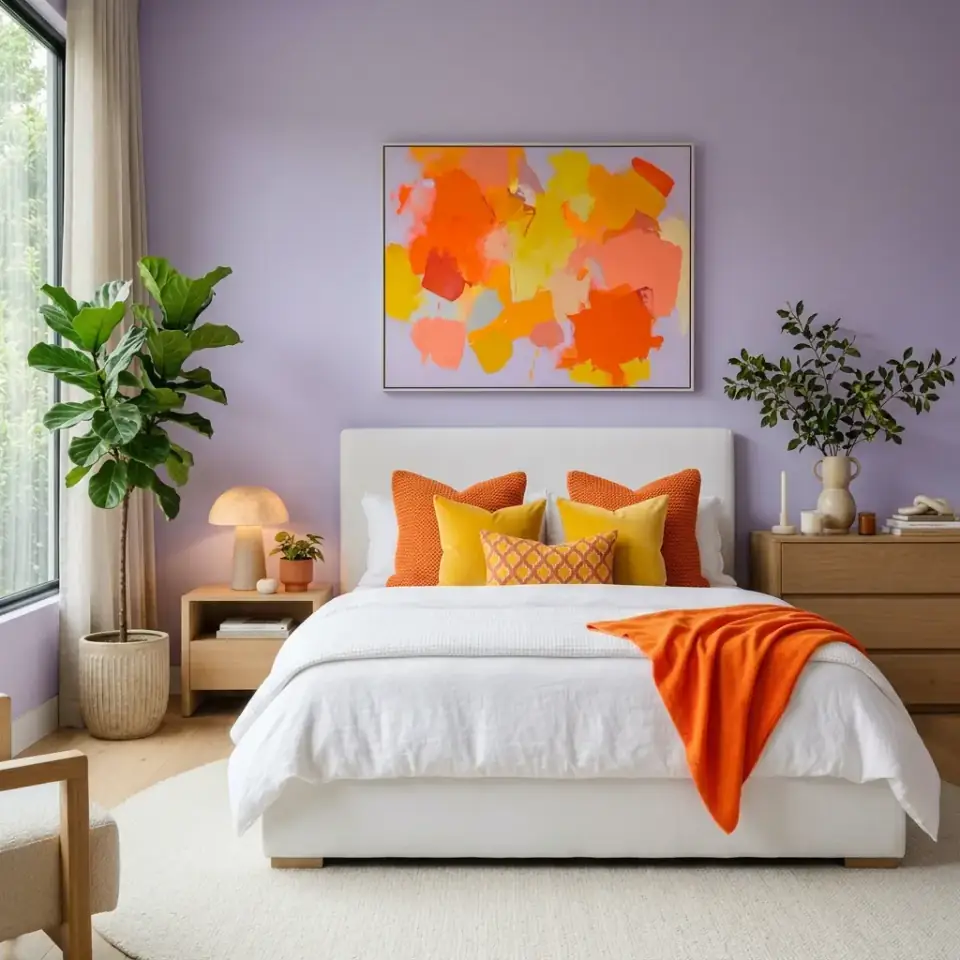
An ultra-feminine romantic format that succeeds on three disciplines: the pastel must be properly desaturated (Farrow & Ball Calluna or Benjamin Moore Wish, never primary purple); the floral wallpaper must be limited to one feature wall; and the room must include a dedicated self-care zone (vanity + lighted mirror) so the bedroom doesn't double as the dressing area. The neon word sign and fairy lights are the era-specific accessories that can be swapped without touching the architecture.
Large-scale floral wallpaper from Schumacher, Cole & Son, or Sandberg runs $200–$400 per single roll plus installation; one feature wall typically needs 3–5 rolls. Specify a paste-the-wall non-woven (not paste-the-paper) — it's removable in a single piece when taste shifts. The lighted Hollywood mirror is the splurge that pays back daily; specify a real LED-bulb mirror from Hollywood Mirrors or the Northeast Lighting at $100–$300 — never the cheap import alternatives that fail at the bulb sockets within a year. Pink velvet armchair in performance velvet (Crypton or Sunbrella) at $300–$700 — decorative velvet doesn't survive the daily-use load.
The Dreamy Pastel Floral room direction brings together soft pastel lilac painted walls, floral wallpaper feature wall, vintage-style white metal bed, vanity table with lighted Hollywood mirror, pink performance-velvet armchair, and custom neon word sign and fairy lights.
Budget notes for Dreamy Pastel Floral room
Floral Wallpaper (Materials & Install for Feature Wall): $300 – $800. White Metal Bed Frame (Queen): $250 – $600. Vanity Table and Stool Set: $200 – $500. Lighted Hollywood Vanity Mirror: $100 – $300.
Pink Velvet Armchair: $300 – $700. Custom Neon Sign: $150 – $400. Bedding, Pillows & Plush Toys: $300 – $700. Decor (Fairy Lights, Shelves, Faux Fur Rug): $200 – $500.
Paint & Supplies: $100 – $250. Total Estimated Cost: $1,900 – $4,750.
Specify removable peel-and-stick wallpaper (Spoonflower, Tempaper, Chasing Paper) for the feature wall if there's any chance the resident's taste will shift in the next three years. Removable wallpaper at this scale runs $150–$400 versus $500+ for traditional paste — and removes cleanly when it's time.
Urban Industrial Loft
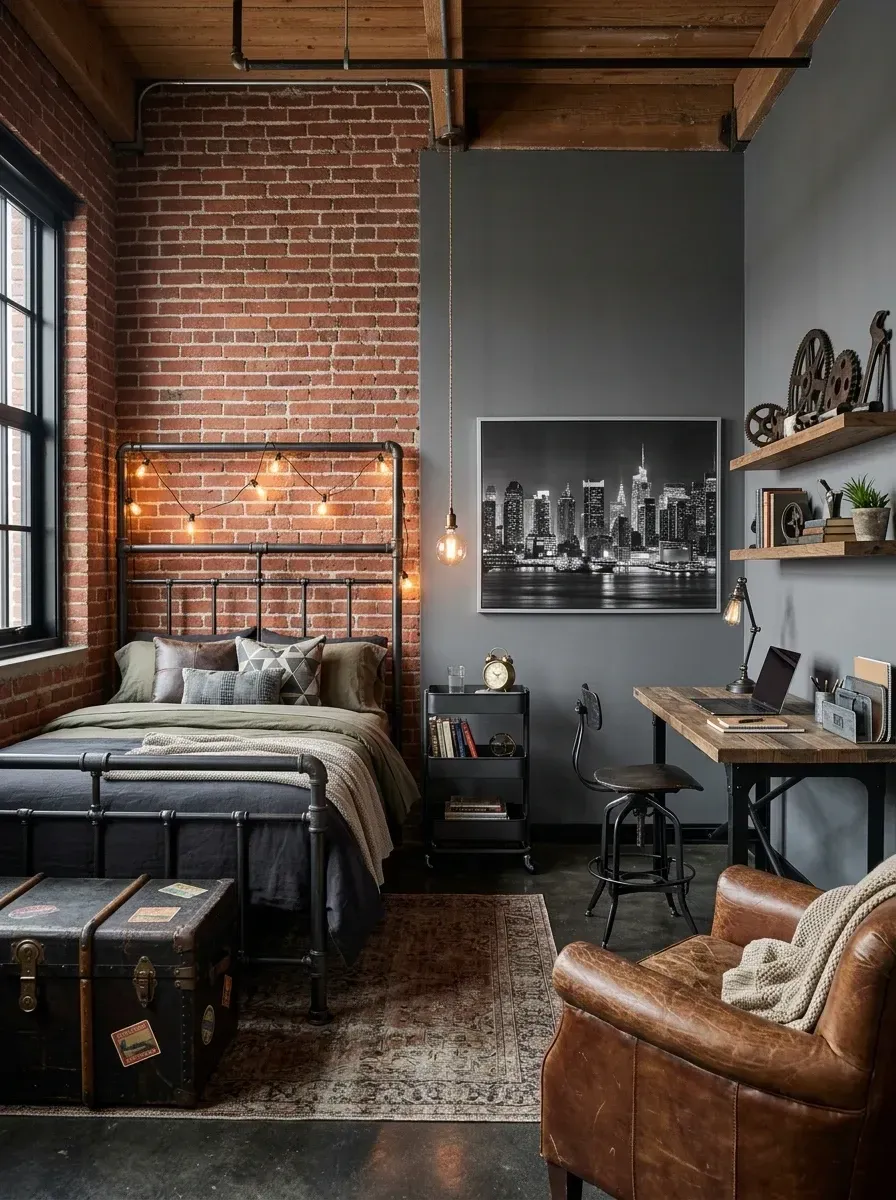
A mature edgy format inspired by Brooklyn or Lower East Side loft conversions. Real exposed brick is the gold standard — but in most the Northeast homes that wall doesn't exist. The 3D faux brick panels (Z-Brick or Faux Brickwall System) are the realistic alternative; from six feet they read as authentic. The dark charcoal walls plus the warm leather chair plus the Edison-bulb pendant create the signature warm-cold balance the format needs.
3D faux brick panels from Z-Brick or a regional supplier run $1,000–$2,500 installed for a single feature wall. The trick to making them read authentic is the grout: use real Type-N mortar troweled by hand, not the pre-mixed acrylic grout the panels ship with — the texture difference is visible at three feet. The leather club chair (Restoration Hardware Lancaster, Gus Modern Quincy, or a vintage Eames chair from regional auctions) at $800–$2,000 is the format's heart. The Edison-bulb pendant light fixture ($150–$400 from Schoolhouse, Cedar & Moss, or Visual Comfort) needs a 2700K warm-white bulb — modern LED Edison-style bulbs in cool-white kill the entire vintage register.
The Urban Industrial Loft direction brings together exposed brick or 3D faux-brick feature wall, dark charcoal concrete-look walls, matte black industrial pipe bed frame, vintage cognac leather club chair, rolling metal utility cart, industrial pipe shelving units, and edison-bulb pendant light fixture.
Budget notes for Urban Industrial Loft
Faux Brick Wall Installation (Materials & Labor): $1,000 – $2,500. Industrial Pipe Bed Frame (Queen): $300 – $800. Vintage Leather Club Chair: $800 – $2,000. Industrial Wood & Metal Desk: $250 – $600.
Industrial Bar Stool / Chair: $100 – $250. Pipe Shelving Units (×2): $200 – $500. Rolling Metal Utility Cart: $50 – $150. Lighting (Edison Pendant + Desk Lamp): $150 – $400.
Large Cityscape Art & Decor: $200 – $500. Paint & Supplies: $150 – $300. Total Estimated Cost: $3,200 – $8,000.
Edison-style bulbs run hotter than standard LEDs and are not approved for fully enclosed fixtures. Verify the pendant fixture is rated for the Edison-style bulb wattage and ventilation requirements — failure here is a real fire-safety concern, not a design issue.
The Creative Artsy Studio
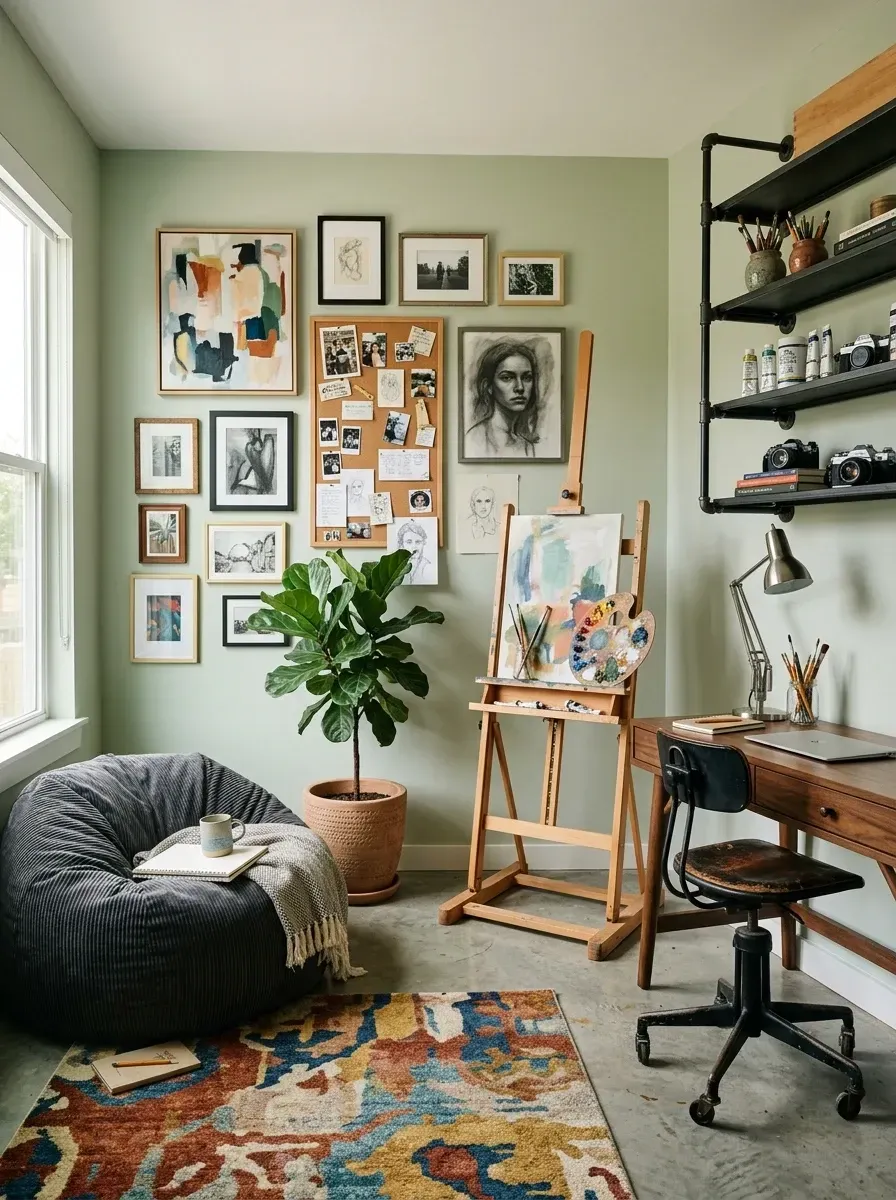
A working studio that doubles as a bedroom. The format-defining decision is dedicating real wall and floor space to creation — a working easel, a clipboard-and-corkboard inspiration wall, art supplies displayed as objects rather than hidden in a closet. The sage green wall is the calming neutral that lets the work itself become the room's color.
The inspiration wall has to be set up to receive constant change. Specify cork-faced backer panels (Forbo Linoleum's natural cork at $5–$8 per square foot) for the lower half of one wall, and a track-mounted gallery rail (J Rail Plus by AS Hanging Systems) for the upper half. The combination lets the resident pin and hang and re-pin without nail holes ever appearing in the drywall. The wood easel is a real H-frame artist's easel (Mabef, Best, or Jullian) at $100–$300 — never the lightweight tabletop alternatives that wobble under canvas. Task lighting matters more than ambient: an adjustable swing-arm desk lamp (Anglepoise Original 1227 or Hay PC) plus a 5000K daylight floor lamp for color-accurate work.
The Creative Artsy Studio direction brings together calming soft sage green painted walls, floor-to-ceiling mixed gallery wall (cork + frame + clipboards), large corduroy bean bag chair, functional H-frame wood artist easel, industrial pipe wall shelves for art supplies, and vintage wooden desk with industrial chair.
Budget notes for The Creative Artsy Studio
Large Corduroy Bean Bag Chair: $150 – $400. Vintage-Style Wood Desk: $300 – $700. Vintage Industrial Desk Chair: $100 – $300. H-Frame Wood Artist Easel: $100 – $300.
Industrial Pipe Shelving Unit: $150 – $350. Abstract Patterned Area Rug: $200 – $600. Gallery Wall (Frames, Cork, Track): $300 – $800. Large Potted Plant (Fiddle Leaf Fig): $100 – $250.
Art Supplies as Decor: $100 – $300. Paint & Supplies: $100 – $250. Total Estimated Cost: $1,600 – $4,250.
Working artists need 5000K daylight-temperature task lighting to judge color accurately — typical 2700K warm-white bulbs shift every paint and pigment toward yellow. Spec one daylight-temperature task fixture at the easel and at the desk; the rest of the room can stay warm-white for evening calm.
Earthy Boho Desert Retreat
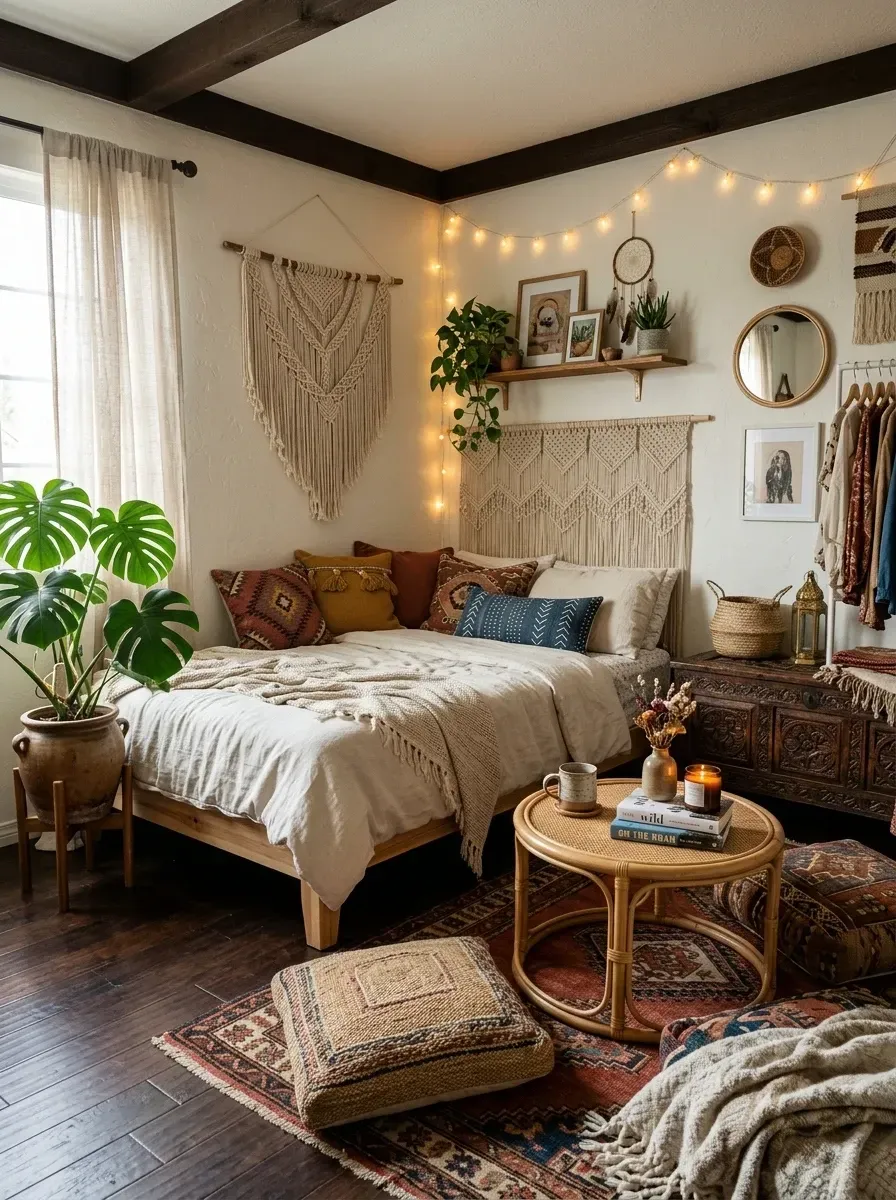
A warm, texture-forward bohemian format inspired by Joshua Tree and Tucson interiors. The dark wood trim and faux ceiling beams against creamy walls is the architectural move that gives the room its bones; without it, the same furnishings would read like a generic boho catalog. The macrame headboard is the hero piece — and one of the few decorative items in the guide that's genuinely budget-friendly while reading high-end.
Real macrame wall hangings from Etsy makers, Modern Macramé, or the Northeast fiber artist run $100–$300 for a 36-inch hanging. Specify cotton (not synthetic) cord — synthetic macrame holds shape but reads plastic up close. The faux ceiling beams (real solid wood, hollow-core wood box beams, or polyurethane "rough sawn" beams from Volterra) run $100–$200 per linear foot installed; for a typical 12×14 bedroom with three beams, figure $1,200–$2,400. The carved wooden storage chest is the single biggest authenticity check — real Indian or Moroccan carved chests from regional importers (Pilgrim & Pio, Wisteria) at $300–$800 read instantly; the laser-cut MDF lookalikes never do.
The Earthy Boho Desert Retreat direction brings together creamy off-white walls with dark chocolate wood trim, faux ceiling beams, large cotton macrame wall hanging as headboard, rattan side table or coffee table, floor cushions and poufs for seating, abundant houseplants in clay pots, layered Persian-over-jute rugs, and carved wooden storage chest.
Budget notes for Earthy Boho Desert Retreat
Simple Wood Platform Bed Frame: $250 – $600. Large Macrame Wall Hanging: $100 – $300. Rattan Side Table or Coffee Table: $150 – $400. Carved Wooden Storage Chest: $300 – $800.
Floor Cushions & Poufs (×3): $150 – $450. Layered Rugs (Large Jute + Medium Patterned): $300 – $800. Houseplants & Pots (×5+): $200 – $500. Decor (String Lights, Baskets, Mirrors): $200 – $500.
Paint & Supplies (Walls + Trim): $150 – $300. Total Estimated Cost: $1,800 – $4,650.
Why this works. Three of the ten teen rooms in this guide rely on a specialty wall or ceiling treatment — exposed brick (room 6), faux beams + dark trim (room 8), or 3D paneling (room 10) — to do work paint alone cannot. If your renovation budget can carry one architectural finish in a teen room, that's the line item with the highest staying power; the swap-able layer (bedding, posters, art) updates around it as taste evolves.
Scandi Minimalist room
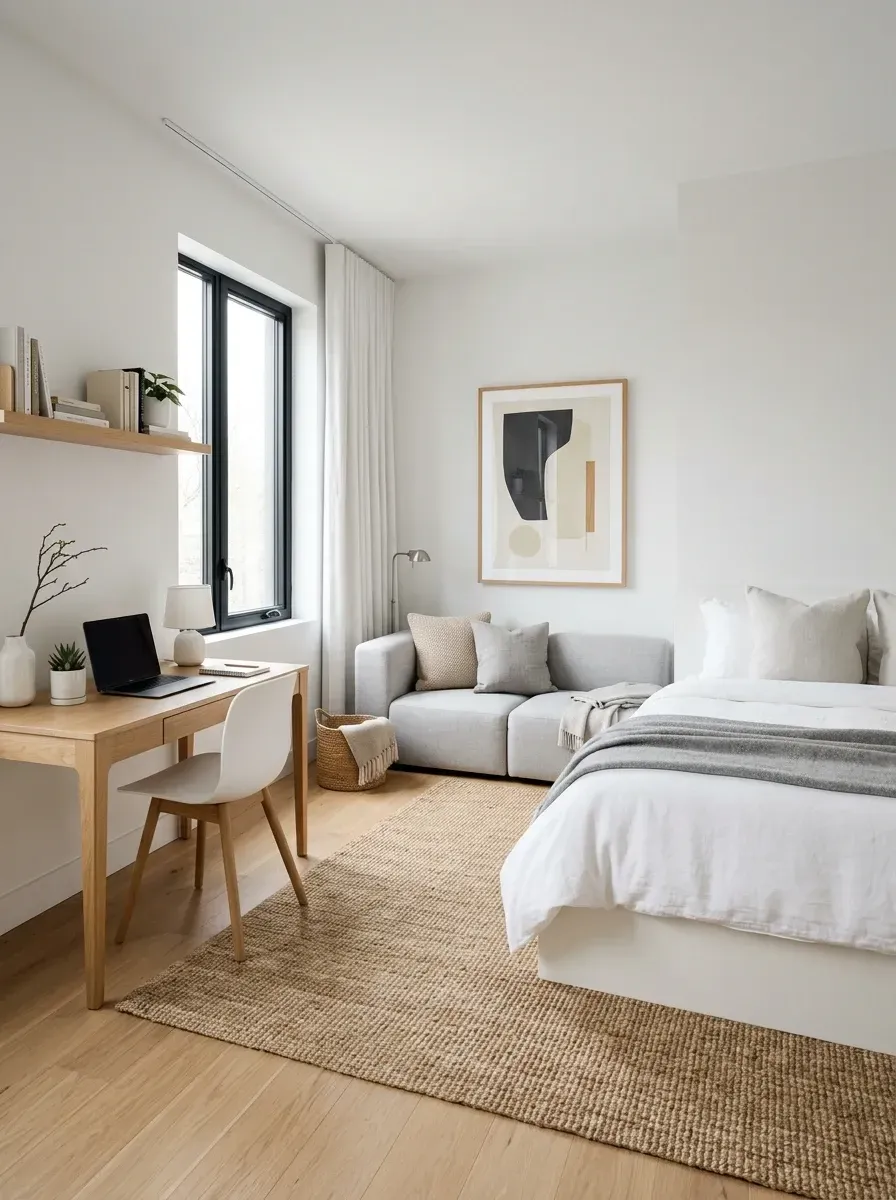
A calm, focus-friendly format for teens who want a room that recedes rather than competes. The strict white-and-light-wood palette is the discipline; the single oversized abstract art piece anchors the room without adding visual noise. Black-framed windows are the small architectural move that prevents the all-white space from going antiseptic — they're the dark punctuation that makes the rest of the white read intentional.
Scandi rooms succeed on furniture quality. A solid oak desk from the Northeast craftsman or Hay (their CPH series) at $250–$600 will outlast three IKEA equivalents. For the platform bed, Article, Norr11, or Muuto — all in the $300–$800 range and all with proper joinery. Belgian linen bedding from Cultiver or Coyuchi at $200–$500 is the splurge worth making in any minimalist bedroom because the bedding becomes the room's largest visible textile. For the abstract art, a custom giclée print on cotton rag at 36×48 inches from a regional fine-art printer runs $200–$400 framed in black or natural oak.
The Scandi Minimalist room direction brings together stark crisp white painted walls, natural light oak flooring and matching furniture, minimalist platform bed with Belgian linen bedding, modular dove-grey loveseat, single large-scale abstract art piece, black-framed windows, and floating shelves with considered decor.
Budget notes for Scandi Minimalist room
Minimalist Oak Platform Bed: $300 – $800. Belgian Linen Bedding Set: $200 – $500. Small Modular Grey Sofa / Loveseat: $600 – $1,500. Slim Oak Desk: $250 – $600.
Modern White Desk Chair: $80 – $200. Large Jute Area Rug: $200 – $500. Large Framed Abstract Art: $150 – $400. Floating Shelves & Minimalist Decor: $150 – $350.
Paint & Supplies: $100 – $250. Total Estimated Cost: $2,030 – $5,100.
Scandi rooms need at least one organic element to escape the showroom read. A real or premium-faux Ficus lyrata or olive tree, a Strelitzia, or a small bowl of seasonal foraged branches — without that, the room reads cold by 8pm regardless of how perfect the palette is.
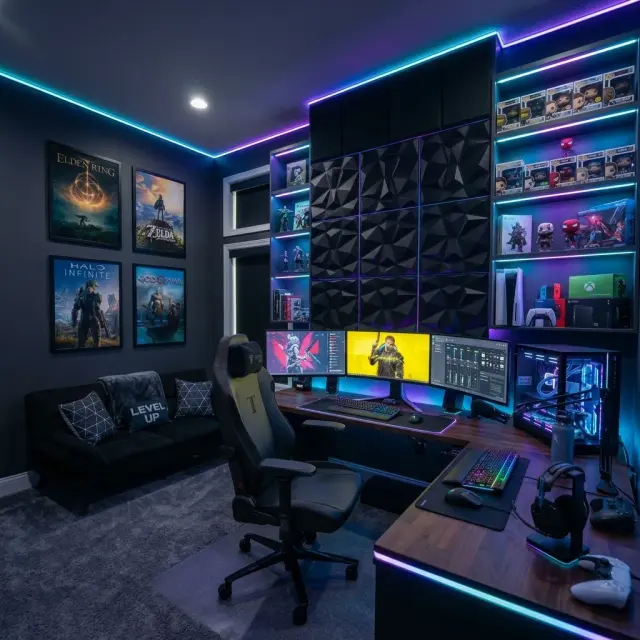
The practical High-Tech Gamer Cave
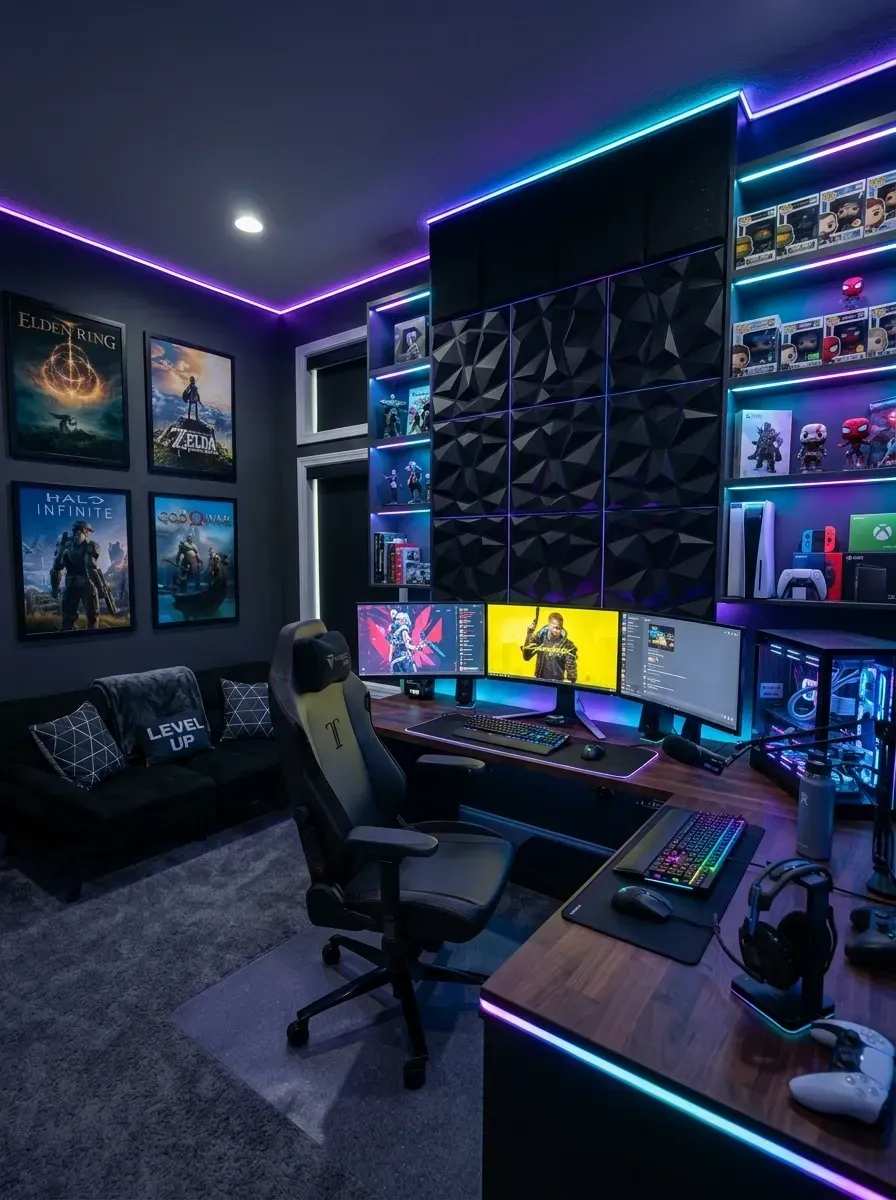
An immersive command-center format for serious gaming, streaming, or competitive play. Dark walls let the screens and RGB lighting carry the visual energy; 3D geometric paneling does dual duty as architectural detail and as acoustic absorption (the unsung win on a streamer's audio quality). The triple-monitor walnut butcher-block desk is the splurge worth making — it outlasts the gaming chair, the PC, and the monitors all by twice.
Cable management belongs on the electrical rough-in drawing — at minimum two dedicated 20-amp circuits for the gaming PC and monitors, three or four cable-management raceways behind the desk, and Cat-6 ethernet runs to the gaming wall (gaming over Wi-Fi adds 20–80ms of latency that competitive players actually feel). The ergonomic gaming chair spec is non-negotiable: Secretlab Titan Evo, Herman Miller Embody Gaming, or Steelcase Series 1 — never the imported "RGB throne" tier under $200, which fail at the lift mechanism within twelve months and cause back pain you'll blame on the desk job. RGB LED strips need a 2700K-to-RGB hybrid spec (Govee Lyra Pro, Nanoleaf Lines, Philips Hue Lightstrip Plus) — the cheap RGB-only strips have no warm-white mode and the room can't shift to "homework lighting" without changing the entire mood.
The practical High-Tech Gamer Cave direction brings together dark charcoal painted walls, custom 3D geometric matte-black acoustic wall panels, extensive integrated RGB and 2700K LED strip lighting, triple-monitor walnut butcher-block desk, high-end PC gaming rig, ergonomic Secretlab or Herman Miller gaming chair, lit floating shelves for collectibles, and black futon or small sofa seating area.
Budget notes for The practical High-Tech Gamer Cave
Walnut Butcher-Block Desk Top & Frame: $600 – $1,200. Ergonomic Gaming Chair (Secretlab / Herman Miller): $400 – $900. Gaming PC & Triple-Monitor Setup (Tech Only): $2,500 – $6,000. Custom Shelving & 3D Wall Panel Installation: $1,000 – $2,500.
RGB / Hybrid LED Lighting System & Diffusers: $300 – $800. Black Futon or Small Sofa: $300 – $700. Tech Accessories (Mic Arm, Stands, Mats): $200 – $500. Paint & Supplies: $150 – $300. Total Estimated Cost: $5,450 – $12,900.
Streaming or competitive gaming needs Cat-6 ethernet hard-wired to the gaming wall, not Wi-Fi. Gaming over Wi-Fi adds 20–80 milliseconds of latency that affects competitive performance and stream quality. Pull the ethernet during framing — retrofit through finished walls is $200–$500 per run.
Planning checks for The practical High-Tech Gamer Cave
Build the permanent layer to outlast three taste shifts. Walls, lighting plan, flooring, built-ins, electrical rough-in — these should all serve the room ten years out, regardless of which vibe is current today. The teenage years move through three or four aesthetic phases; the architecture should sit underneath all of them.
Limit themed elements to the swap-able layer. Bedding, posters, accessories, throws, decorative objects — these are the things that change every eighteen months. Keep the major furniture in neutral tones (grey, white, oak, walnut) so you're not refurnishing the room every time the resident's taste shifts.
Plan cable management at framing, not finish. Floor outlets near the desk, USB-C charging zones, ethernet drops, monitor power, gaming-PC dedicated circuits — all of this gets specified before drywall closes. Retrofit is $400–$800 per outlet and tears up flooring; rough-in is $80.
Spec acoustic absorption into the room. A wool rug under the desk, a thick curtain on at least one window, an upholstered chair, and (for streamers) one acoustic-panel feature wall. Acoustic absorption is what makes any teen room feel calm rather than restless — and what makes streaming audio quality acceptable.
One organic element per room, minimum. Real or premium-faux fiddle leaf fig, olive tree, eucalyptus stems in a vase. Without one piece of nature with a real silhouette, the room reads cataloged regardless of style.
Budget priorities for Ten Teen Bedroom Vibes
Thrift the dressers, desks, and accent furniture. the Northeast estate sales, Brooklyn flea markets, and Etsy vintage sellers are loaded with mid-century walnut dressers, vintage brass beds, and authentic Eames-era chairs at 50–70% under retail. A coat of furniture wax or refinishing oil transforms a $200 dresser into a $1,500 look.
Removable wallpaper over traditional paste-the-wall. Spoonflower, Tempaper, Chasing Paper, and Anthropologie removable wallpaper at $40–$80 per roll delivers 90% of the look for a feature wall and removes cleanly when taste shifts. For teen rooms specifically, this is almost always the right spec over committed installation.
IKEA + Article + a single splurge piece. A bed and dresser from IKEA's Hemnes line ($300–$700 combined), an Article or Castlery sofa or chair ($600–$1,200), and one splurge piece (built-ins, a real leather chair, custom acoustic paneling) hits 90% of any of these formats at half the cost of full custom.
DIY industrial pipe shelving and desks. Black iron pipe fittings and flanges from a hardware store ($150–$200) plus a butcher-block top ($150–$300) yield the industrial-style desk and pipe-shelf format at a quarter of the retail cost. Real iron pipe weight reads as honest material.
The Core Idea. A teen bedroom is not a furniture-shopping problem; it's a flexibility problem. The walls, lighting, electrical infrastructure, and built-ins are framing-stage decisions that should outlast three taste shifts; the bedding, posters, and accessories are the swap-able layer that updates every eighteen months. Build the room with that two-layer discipline and any of the ten vibes above is reachable on the same architectural footprint, and a switch from sports hub to dark academia or pastel retreat becomes a weekend, not a renovation.
Questions about Ten Teen Bedroom Vibes
How much does a complete teen room transformation cost?
In the 2026 Northeast, a full teen-room reset typically lands between $1,650 and $13,000 depending on style and whether millwork is involved. The lighter formats (sports hub, pastel floral, artsy studio, Scandi minimalist) land near $1,650–$5,000; the medium-budget formats (coastal, boho, urban industrial) run $2,500–$8,000; the build-heavy formats (dark academia with custom built-ins, high-tech gamer cave with custom panels) run $5,500–$13,000. The biggest single budget swing is custom millwork or built-ins versus freestanding furniture.
Separate the permanent layer from the swap-able layer. The walls, flooring, lighting plan, electrical infrastructure, and any built-ins should serve the room for a decade — pick neutral or timeless choices for these (oak floors, dimmable lighting, neutral paint or a heritage color you'd live with as an adult, classic millwork). The bedding, posters, accessories, removable wallpaper, and decorative objects are the layer that updates every eighteen months. Build the architecture so the swap-able layer can shift without renovating.
What is the single most important investment in a teen bedroom?
Lighting — by a wide margin. A typical builder-grade teen room has one harsh overhead fixture and no dimmer; the result is a space that reads functional during homework and harsh in the evening. Three layers of lighting (overhead on a dimmer, a real task lamp at the desk, and accent lighting via string lights, LED strips, or a floor lamp) transform any teen-room style at a fraction of the furniture cost. Lutron Caséta dimmers at $60 a switch installed; a quality task lamp from Hay or Anglepoise at $150–$300; LED accent strips at $50–$150.
What's the best chair for a teen who games or studies for hours?
An ergonomic chair tier — Secretlab Titan Evo, Herman Miller Embody Gaming, Herman Miller Aeron, Steelcase Series 1, or Steelcase Gesture — runs $400–$1,200 and outperforms imported "RGB gaming throne" chairs under $200 by every measure (lift mechanism reliability, cushion compression, lumbar support, longevity). Teens spend 6–10 hours daily in these chairs during homework and gaming combined; under-spending here causes back pain that gets blamed on schoolwork or screen time. Spend here first.
Can a teen room work for both gaming and homework?
Yes, with a dual-purpose lighting plan and proper desk infrastructure. Specify hybrid LED strips (Govee Lyra Pro, Nanoleaf Lines, or Philips Hue Lightstrip Plus) that include a 2700K warm-white mode for homework alongside the gaming RGB modes. Pull Cat-6 ethernet to the desk during framing — gaming over Wi-Fi adds 20–80ms of latency. Ensure the desk is large enough for monitors plus textbook-and-paper space (a 60×30 inch surface is the practical minimum). Keep the gaming chair on a chair mat to protect floors during eight-hour sessions.
Co-design works better than full delegation. Let the teen pick the swap-able layer — bedding, posters, throws, accessories, the specific paint accent color from a considered three-color palette, the removable wallpaper if any. Keep parental control over the permanent layer — wall finishes, lighting infrastructure, built-ins, electrical, the substrate of any major furniture. The two-layer division gives the resident agency over their daily-experience choices while keeping the architecture from becoming a series of regretted commitments by year three.
For the layered, character-forward design philosophy that aligns with the eclectic boho (#3) and earthy boho desert (#8) formats, the scandi-boho kids room forever-design guide covers a similar approach for younger residents whose rooms still need to age into teenage years. And for the adult-bedroom version of the Scandi (#9) and dark academia (#1) formats, the quiet luxury bedroom guide walks through eight rooms that share the same restraint vocabulary.
Sources & Further Reading
- Architectural Digest. Teen Bedroom Design Trends and Color Direction. architecturaldigest.com
- Houzz Editorial. How to Design a Bedroom That Grows with Your Teen. houzz.com
- Remodelista. 10 Secrets for a Calm Bedroom. remodelista.com
- Benjamin Moore. Color Trends and Historical Collection Specifications. benjaminmoore.com
- Farrow & Ball. Paint Color Encyclopedia & Specifications. farrow-ball.com
- Lutron Electronics. Caséta Wireless Lighting Control — Residential Specification Guide. lutron.com
- Herman Miller Research. The Science of Office and Gaming Ergonomics. hermanmiller.com
- Spoonflower / Tempaper. Removable Wallpaper Construction and Removal Guidelines. spoonflower.com
- Cultiver. Belgian Flax Linen Bedding Care & Construction Guide. cultiver.com
- This Old House. How to Install Picture-Frame Wall Molding and Shiplap. thisoldhouse.com

Renovations & Interiors Desk
Renovation Studies & Room Guides · Northeast United States research focusThe Renovations & Interiors Desk develops sourced room guides and editorial concept studies without presenting concepts as completed client work.
More from this desk →
Reader notes